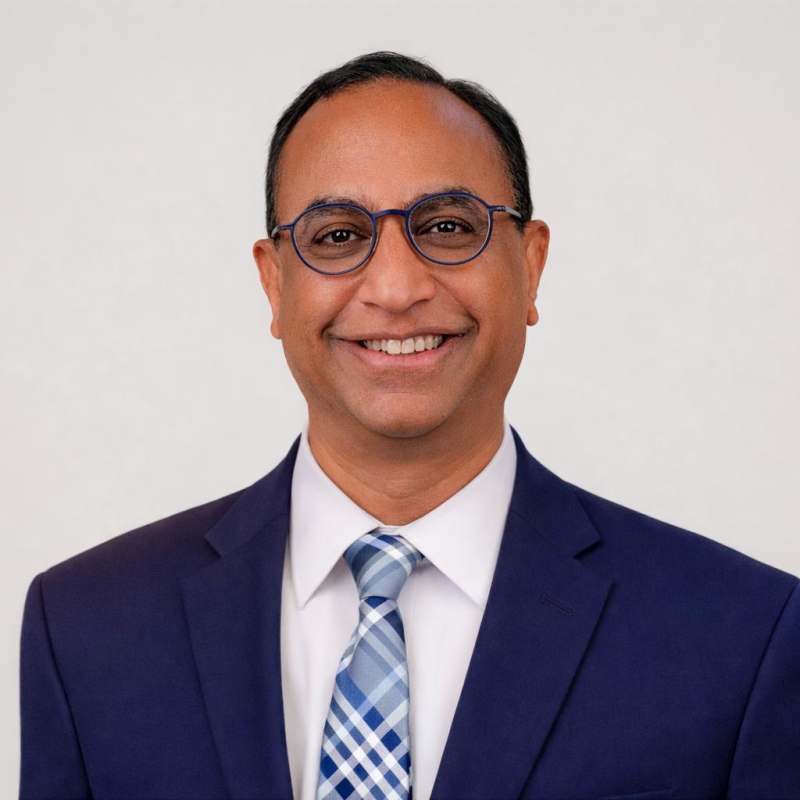
Laurel Cipriani is the Chief Information Officer at AffirmedRX, a transparent pharmacy benefits management company built on a mission to make medications accessible and affordable for everyone. A clinician by training and a registered nurse originally, Laurel brings a rare combination of frontline healthcare experience, executive technology leadership, and global policy engagement to her role. She joined AffirmedRX in December 2025 and is currently building the company's IT department, data and analytics function, and AI strategy from the ground up at a company that has been operating for approximately four years. Beyond her work at AffirmedRX, Laurel is an active AI ethicist and member of the Digital Economist, a Washington DC-based think tank focused on the intersection of technology, ethics, and global policy. She has represented that organization at the World Economic Forum in Davos and participated on panels at New York Fashion Week through her involvement with the Fashion Fusion Technology Group, an organization working to apply technology to sustainable and circular fashion. Her perspective spans healthcare transparency, responsible AI adoption, data security, and the broader social and economic forces that technology either reinforces or disrupts.








Here’s a glimpse of what you’ll learn:
- How AffirmedRX is differentiating itself from the big three pharmacy benefit managers through transparency, patient-centered care, and a model built around proactive patient advocacy
- Why Laurel and the AffirmedRX leadership team are taking a deliberately cautious, non-PHI approach to AI adoption while building toward broader patient care applications
- What it means to treat AI as an employee rather than a tool, and why that mindset shift determines whether AI actually delivers value inside an organization
- How quantum computing is changing the threat landscape for healthcare data and why quantum-proof security is already on the AffirmedRX roadmap
- What Laurel experienced at the World Economic Forum in Davos and why she believes you cannot make global change if you are not willing to push through the discomfort of being in the room
- How blockchain technology is being explored to bring ethical accountability and supply chain transparency to the fashion industry
- Why Klarna's aggressive AI agent rollout serves as a cautionary tale for any organization tempted to replace human judgment with automation before the technology is ready
- The connection between fast fashion, economic inequality, and the misaligned incentives that Laurel argues are at the root of many of today's most urgent systemic problems
In this episode…
Laurel opens with a clear-eyed description of what AffirmedRX is attempting to do in one of the most entrenched and resistant markets in American healthcare. The big three pharmacy benefit managers have decades of history, established relationships, and enormous switching costs working in their favor. AffirmedRX is betting that transparency, outcomes, and a genuinely patient-first model through its Patient Care Advocates will eventually make the choice obvious for employers. Laurel is direct about the challenge: even people who love the mission in writing hesitate to put their employees through the disruption of changing plans. The company's answer is to let results do the talking, including a white paper in progress at the time of recording detailing the outcomes they have already achieved.
The conversation around AI is where Laurel's dual identity as practitioner and ethicist comes through most clearly. AffirmedRX is using AI, but strictly for internal business process optimization and not yet for anything that touches protected health information. Every recommendation made by AI requires a human to sign off. Pharmacists are designing the models and reviewing the outputs. That discipline is not timidity. It is the product of a CIO who understands that in healthcare, the cost of getting AI wrong is not just financial. It is human. Laurel also introduces a goal she has set for the entire organization: every steward at AffirmedRX should be able to speak confidently about the responsible use of AI in their own role by the end of the year.
The Davos segment brings an unexpected and unusually candid thread to the conversation. Laurel describes arriving at the World Economic Forum with what she calls a naive impression that this was where the world's problems get solved, and encountering something far more complicated. Billboards targeting attendees, luxury fashion as social currency, and a pervasive sense of conflict between the forum's stated ideals and its visible reality. She dealt with it by asking every stranger she met whether they felt the same discomfort. The answer was universally yes. Her conclusion: you cannot make global change if you are not willing to be in the room, even when the room makes you uncomfortable. That philosophy connects directly to the work she is doing at AffirmedRX, at the think tank, and in the fashion sustainability space.
The episode closes with a wide-ranging discussion about the relationship between technology, economic inequality, and systemic change. Laurel draws a line from fast fashion's hidden costs to the misaligned incentives that keep people economically disadvantaged, and frames AI as a potential equalizer if it develops in time and in the right direction. Her argument is not that technology will solve everything. It is that the people who care enough to show up, do the unglamorous work, and push for change from inside the system are the ones who have the best chance of actually moving it.
Resources mentioned in this episode
Matthew Connor on LinkedIn
CyberLynx Website
Laurel Cipriani on LinkedIn
AffirmedRX Website
Sponsor for this episode...
This episode is brought to you by CyberLynx.com
CyberL-Y-N-X.com.
CyberLynx is a complete technology solution provider to ensure your business has the most reliable and professional IT service.
The bottom line is we help protect you from cyber attacks, malware attacks, and the dreaded Dark Web.
Our professional support includes managed IT services, IT help desk services, cybersecurity services, data backup and recovery, and VoIP services. Our reputable and experienced team, quick response time, and hassle-free process ensures that clients are 100% satisfied.
To learn more, visit cyberlynx.com, email us at help@cyberlynx.com, or give us a call at 202-996-6600.
Check out other related episodes:
The Two AI Attack Paths Every Security Leader Needs to Understand Now with Sinan Al Taie
IT Leadership in Regulated Industries: Service Management, AI Risk, and the CIO Mindset with Bryan Younger
Leadership Awareness and Technology Strategy in Higher Education with Mark Bojeun
Transcript:
Cyber Business Podcast – Laurel Cipriani, CIO at AffirmedRX
Matthew: Matthew Connor here, host of the Cyber Business Podcast. Today we're joined by Laurel Cipriani, CIO at AffirmedRX. Laurel, welcome to the show.
Laurel: Thank you so much, Matthew. I'm so excited to be here.
Matthew: I'm so excited to have you on. This is going to be a great episode. Before we get too far in, a quick word from our sponsors.
[SPONSOR READ: Hackers are getting smarter. Is your security keeping up? CyberLynx sells industry-leading, AI-powered cybersecurity solutions that detect threats in real time — so you know about an attack before the damage is done, not after. Learn more at CyberLynx.com.]
And now back to our show. Laurel, for those who aren't familiar, can you tell us about AffirmedRX and your role there as CIO?
Laurel: I would love to. AffirmedRX is a transparent pharmacy benefits management company. When most people hear the acronym PBM, they have an understandably negative reaction — so I always hesitate to lead with that. What makes us different is our transparency. We are a new kind of PBM. Our mission is to fight for transparency and patient-centric care. We want to make drugs accessible and affordable for everyone. Our CEO is a pharmacist, and his mission in life is genuinely to make medications accessible — that's what we're trying to do.
My role is especially exciting because as CIO, I get to use technology and innovation to make those goals a reality. We are an early-stage company — about four years old. I just joined AffirmedRX in December, and we're at the stage where we're truly building out an IT department and a real data, analytics, and reporting function. It's an incredible opportunity to build something from the ground up.
Matthew: The whole thing sounds exciting and genuinely honorable. I think a lot of what's broken in the medical system right now comes down to the financial pressure the insurance industry has put on providers. Doctors are leaving medicine in droves, and we're looking at an enormous provider shortage. Getting an appointment now takes months, and that seems universal. If you can make any kind of dent in that — I'm all for it. How challenging is it?
Laurel: It's difficult for several reasons. The big three PBMs are so firmly entrenched in the market — they have decades of history and deep relationships. And while everyone nods enthusiastically at our mission in theory, actually switching from one PBM to another introduces real complexity for employers and their employees. Members get new ID numbers and insurance cards, have to notify all their providers, and inevitably hit roadblocks during the transition. I experienced that firsthand this year after joining AffirmedRX — I'd been with my prior employer for 11 years and the same TPA the whole time, and my first three or four appointments after the change were all hiccups. So I understand why employers are hesitant to put their people through that, especially when what they have feels like it's working well enough.
That said, I do believe that once we start demonstrating the savings we're achieving and sharing the quality of interactions our patients are having with pharmacies — how much happier they are — we will honestly struggle to keep up with the business that comes our way. I just got off a call where we're working on a white paper about some really great outcomes, and we're excited to start sharing those stories so we can give people the confidence that we really can change the industry. We're starting with pharmacy, but our goal is healthcare overall. Greg, our CEO, and I are both clinicians by training — I'm a nurse originally — and it genuinely pains us the way the system operates today and the way patients struggle. We want to change all of it.
Matthew: And you get to build from scratch at a time when AI is transforming everything. If you're going to compete with the entrenched giants, you have to be better, faster, and smarter. How are you thinking about leveraging AI?
Laurel: I'm so glad you asked. I'm a passionate AI user, but also an AI ethicist — I'm part of a think tank out of DC that focuses specifically on these issues. When I came to AffirmedRX, one of the first questions internally was, what can we do with AI? And we are starting to use it, but we are being incredibly careful — because the data we hold for our members is the most sacred thing in the world, and I take that responsibility as CIO very seriously. It keeps me up at night. Especially now with quantum computing emerging, the threat surface for data breaches is only getting more complex — so we're already looking at quantum-proof security measures.
What I can say is that the initial AI work we're doing internally does not use PHI. We're focused on business process efficiencies — allowing our pharmacists, for example, to focus on patient care rather than looking up regulations or comparing medications. We're starting with those use cases to build our comfort level with the model, with our security, and with our outcomes. We will move into patient care use cases as well, but right now we're staying strictly with business optimization.
And our fundamental principle is that AI will never make a decision by itself. A human will sign off on everything AI recommends — including business decisions. Our pharmacists are designing the logic that feeds the model, and they're reviewing and signing off on its recommendations.
Matthew: I think that's exactly the right approach. Microsoft did a study when they rolled out Copilot internally and found that only about 15% of people continued using it beyond the first few weeks. What they discovered was that the adopters weren't using it as a tool — they were treating it like an intern or a new employee. They were applying managerial skills: training it, supervising it, holding themselves accountable for its output. That's actually a new skill set for most people, who are used to being individual contributors, not managers. But that framing — you are the boss of the AI — seems to be the key to making it actually work.
Laurel: I love that framing. I hadn't heard it put exactly that way, but it aligns completely with what we're trying to build. One of my goals for the year is for every team member at AffirmedRX — we call our people stewards — to be able to speak about responsible AI use and know how they can apply it in their own role. That is an entirely new skill set. When I was at the World Economic Forum in January, I spoke with someone who is building a school in India for high school students with a curriculum focused on how to use AI in the real world — because they recognize that without those skills, young people will be at a real disadvantage. My job as CIO is to give our stewards those capabilities so they can perform at their highest and best use.
We have no plans to use AI to replace jobs. We want it to be a helpmate — by your side, doing certain things with you, but you remain the boss. No matter your role in the company, you are the boss of your AI.
Matthew: And I think that's the right instinct, especially given what we've seen happen when companies go the other direction. Klarna is a great example — they went heavily into AI and agents, let go of a significant number of people, said it was saving them tens of thousands of hours. Then the quality of responses was so poor they had to rush to rehire. We're just not at the point where AI replaces people well, and companies that think otherwise are going to pay for that.
Now let's talk security, because as the CIO of a healthcare company in an early stage, this is fascinating. You have the most sensitive kind of data — PHI, financial data, members' health information. And you're taking on entrenched players who arguably have the resources and motivation to want to see you struggle. Do you see AffirmedRX as a bigger target than a typical early-stage company?
Laurel: Honestly, yes — and it's a concern for any healthcare or financial services company. Data is the most valuable commodity there is, and that's what everyone is after. Greg and I both view security as our number one priority. We are hyper-vigilant, almost obsessive about it. We are doing everything we can to have the most elevated security posture possible. I won't talk about specific strategies, but we are on high alert 24/7 because we understand the value of the data we hold.
Matthew: And that's such a challenge at the early stage because you look at a company like JP Morgan Chase — they spend $15 billion a year on cybersecurity and they're still under more attack than the US government. A startup obviously doesn't have $15 billion. So you have to be incredibly smart and creative about where you invest and what tools you use. That's where AI-powered security tools become so interesting — because you can get an outsized return on a much smaller investment. Darktrace is a great example: purpose-built machine learning for security, not just an LLM bolted onto an existing product. CrowdStrike and SentinelOne have done similar things — using AI to help analysts quickly assess what an alert means and respond faster. These tools effectively supercharge a small security team. And that's going to matter a lot for companies like yours.
Laurel: Absolutely. And those are exactly the kinds of tools and approaches we're looking at. The stakes are real. It's terrifying and exciting all at once — but the mission is bigger than the fear.
Matthew: I know we could go so much deeper here, but I do want to touch on something from your LinkedIn before we go — your trip to Davos and the World Economic Forum. You wrote about it so thoughtfully. Can you give us a sense of what that experience was really like?
Laurel: I could talk about this all day. I grew up in Tennessee in a smallish, salt-of-the-earth community — lower middle class. We didn't have a lot of money, and that's just how I'm wired. I'd dreamed of going to Davos with this almost naive impression that this is where people can genuinely change the world. I joined the Digital Economist, the think tank I mentioned, and was able to go as part of their delegation.
When I got there, it hit me almost immediately. There are billboards all over town with really pointed statements targeting the people attending WEF. And then everywhere I went there was this conflict. Billionaires, very polarizing political figures, people there for very different reasons. I started having feelings of almost shame — why did I want to put myself here? So I did something a little unusual. I started asking everyone I interacted with: do you feel weird about being here? At a bus stop, sharing a taxi with strangers — universally the answer was yes. But the follow-up was always the same: you have no chance of making global change if you're not in the room. You have to push through the discomfort, remember your purpose, and not let the rest of it derail you.
Something I learned that I didn't fully understand beforehand is that Davos functions like concentric circles. In the center are the leading politicians and billionaires. The rest of us operate in what they call the fringe — meetings and events surrounding the core. And I think the majority of the fringe are people like me: not millionaires, who had to stretch financially to be there, but who went because of their purpose. I bought a bag on Amazon because I wasn't going to bring something nice and worry about it, and I literally had women looking me up and down, assessing my brand and my shoes. And I had to keep reminding myself: that's not why I'm here. I'm here representing the state of Tennessee, representing the patients whose healthcare I want to improve. It was an ongoing internal struggle. But I'm so glad I went, and I'm going to go back.
Matthew: And it brings up this fascinating intersection of fashion and technology, which you've also been getting into. The Davos experience — the logo bags, the very public display of wealth — it is a bit gross in one sense. But then you look at the flip side: there's genuinely ethical fashion made with fairly sourced materials by fairly compensated workers, and that carries a real cost. And then you've got the fast fashion side — basically plastic clothing produced in poor labor conditions that ends up on beaches in Africa. Where does technology fit in to changing any of this?
Laurel: The connection I've been exploring through my involvement with Ambrelle Pansy's Fashion Fusion Technology Group is using tools like blockchain to create supply chain transparency — tracing the origin of a fiber, where it was cut, where it was dyed, where it was sewn, who did the work and whether they were paid fairly. I was actually on a panel at New York Fashion Week a couple of weeks ago discussing exactly this.
But there's a tension there: if you're capturing all that data to ensure people are recognized and compensated fairly, you have to also make sure that data is in safe hands and not used for surveillance or exploitation. These are complicated problems. But really smart people are working on them.
And to your point about accessibility — we don't want ethical fashion to only be available to high-end luxury buyers. Brands like Brunello Cucinelli have built their entire model around paying people fairly and sourcing ethically, and that carries a price point that most people can't access. But part of what the Fashion Fusion group is working on is how to make sustainability not just a luxury — how to make it accessible for everyone. I have hope that we get there.
Matthew: And all of these issues are connected — the incentive misalignment in healthcare, in fashion, in social media. The people designing the algorithms at major social platforms are betting that we'll stay addicted and passive rather than going out and making change. And there's a real question of whether AI becomes the great equalizer — making scarcity less of a constraint — or whether it accelerates the divide. I genuinely don't know, but I think the people who are willing to be in rooms like Davos, uncomfortable as it may be, fighting for the right things, are the ones who have the best shot at shaping what comes next.
Laurel: I couldn't agree more. And one panel at Davos that really stuck with me was a group of tech leaders, including someone from Pinterest, who pointed out that they've built a successful platform specifically designed not to trap you there. Their goal is to help you dream, design, and then go build it — go do it. They've even designed features that tell users under 18 to come back after school. You can be a successful tech company and still have guardrails. You just have to be willing to do it — or be compelled to.
Matthew: Laurel, this has been an absolute blast. We could go for hours — we didn't even get to women in tech, which is its own whole conversation. Before we go, where can everyone find out more about you and about AffirmedRX?
Laurel: You can find me on LinkedIn — Laurel Cipriani. I post about the work I'm involved in and the causes I care about. And for AffirmedRX, our website is affirmedrx.com. We are early stage but just getting started, and I cannot wait for more people to hear about us and see our results.
Matthew: Fantastic. We are definitely having you back on — there's too much more to cover. Until next time, Laurel. Thank you!
Laurel: Thank you so much. This has been so much fun. Bye!