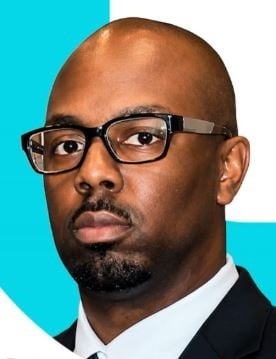
Benjamin Chaney is the CISO at Exalta Group, a concept to launch medtech manufacturing group formed about a year and a half ago from three legacy companies. He moved from head of IT at one of them into the CISO role at the merger and built the security function from a greenfield start. Benjamin and Matthew discuss how he positions cybersecurity as a business partner, how AI is changing alert triage and attacker speed, and why the fundamentals still matter. They also cover why security stays everyone's job, how to protect the next generation's foundational skills, and why he tells his teams to treat AI like an intern.








Here’s a glimpse of what you’ll learn:
- How Exalta Group's CISO went from head of IT to building security from a greenfield start
- Why Benjamin wants cybersecurity seen as a business partner, not another cost center
- How a hybrid of a core team and an MSP lets Exalta scale through mergers
- How AI triage helps sort true positives from false positives across thousands of alerts
- Why zero trust, group policies, and baselines contained a recent incident in minutes
- Why automation is the answer to Patch Tuesday's growing vulnerability counts
- Why security will always be everyone's job
- Why Benjamin says to treat AI like an intern and review every line
In this episode…
Benjamin explains that Exalta Group is a concept to launch medtech manufacturing group, formed about a year and a half ago from three legacy companies, Resolve, Tiber, and Intech Medical. It makes metal implants and handles design, engineering, manufacturing, and FDA compliance. He says his role is the back end work: they do not let him touch and make things, but he helps protect the infrastructure so the business can move fast and deliver to its customers and patients. Having been head of IT at one of the three companies, he took the CISO role at the merger and approached it as a greenfield build, blending three different IT models. He says he used the merger to ask what levers the business can pull and to put cybersecurity as more of a business partner versus another cost center. The result is a hybrid: a core internal team for cybersecurity and IT operations, with tier 1 and some tier 2 work handled by an MSP, so the internal team can focus on project work and respond to mergers and growth without slowing the business down. He adds that the team rebranded as digital information solutions because the CEO felt IT sounded archaic.
On AI, Benjamin says the CEO wants a real return on investment, from help desk chatbots to AI assisted alert triage. He says triage helps him separate true indicators of compromise from false positives across 8,000 to 10,000 alerts, and that it is way faster to double check the work than to comb through those logs. The part that keeps him up at night is that threat actors are moving at the same speed, with more vulnerabilities and less time from compromise to data theft. He credits zero trust, group policies, and baselines for helping contain a recent incident in about two or three minutes, because those protections need to be in place automatically to slow things down. He says Patch Tuesday keeps setting records, and the answer is automation, including AI and internal agents. He still says security will always be everyone's job, and that the person in accounting is the most pivotal part of cybersecurity, because people are the ones interacting with technology. He describes security as an ebb and flow, with attackers finding the next gap each time the tools catch up.
Benjamin pushes back on how easy AI makes project work: he says people like him learned by getting their hands dirty, and he worries the next generation will lose that foundational understanding and only get it as theory in formal education. He says foundational knowledge is what makes checks and balances possible: if you know how a system should work and what the result should look like, you can use AI as a tool and review the output. His internal training rule is to treat AI like an intern, because you would not trust an intern to write a board presentation without reviewing every line, and he adds that with garbage in, garbage out, organizations need to put good data into their AI models. He is concerned about anyone at any age automating things without understanding the risks, and he compares AI to factory automation, which he says let people focus on the important work. He says identity and privilege access management frameworks should expand to cover AI integrations, so AI is managed as part of one framework instead of a separate bucket. Benjamin closes by pointing listeners to his LinkedIn profile and to Exalta online, and Matthew thanks him for coming on.
Resources mentioned in this episode
CyberLynx Website
Benjamin Chaney on LinkedIn
Exalta Group Website
Darktrace Website
Abnormal AI Website
Sponsor for this episode...
This episode is brought to you by CyberLynx.
CyberLynx is a Bethesda managed IT and cybersecurity company. Local techs you know, not a call center. Month-to-month. 24/7 intrusion detection.
We help growing companies with managed IT, help desk, backup and recovery, and a fractional CIO.
Talk to us at https://cyberlynx.com/contact, info@cyberlynx.com, or 301-798-9170.
Check out previous episodes:
A Traffic Cop for AI Agents: License, Registration, and Limits with Ralph Hogaboom - Ep 257
AI Does Not Know Right From Wrong: Accountability and Oversight with Tyrone Watson-Ferguson - Ep 256
The Decoys Got Hammered: Pen Tests, DIY Audits, and AI Done Slowly with Jason Meszaros - Ep 255
Transcript:
Cyber Business Podcast
Guest: Benjamin Chaney
CISO
Exalta Group
Host: Matthew Connor
Matthew Connor: Matthew Connor here, host of the Cyber Business Podcast. Today we're joined by Benjamin Chaney, CISO at Exalta Group. Benjamin, welcome to the show.
Benjamin Chaney: Thank you for having me, Matthew. Glad to be here.
Matthew Connor: Thanks for coming on. Before we get too far in, a quick word from our sponsor.
Sponsor Break: Cyberlynx. Hackers are using AI to conduct machine-speed attacks. Is your security keeping up? CyberLynx sells industry-leading AI-powered cybersecurity solutions that detect threats in real time, so you know about an attack before the damage is done, not after. Learn more at cyberlynx.com. That's cyberlynx.com.
Matthew Connor: And now back to our show. Benjamin, for those who aren't familiar, can you tell us about Exalta Group and your role there as CISO?
Benjamin Chaney: Yeah. Exalta is a concept-to-launch medtech manufacturing group. We merged about a year and a half ago into Exalta Group from three legacy companies: Resolve, Tiber, and Intech Medical. Our goal is to do metals manufacturing for a lot of the implants that you'll see, from cervical plates to wrist plates, a lot of really cool things that are going on. It's from start to finish, so design, engineering, manufacturing, and even some of the post-manufacturing work, with FDA compliance and nonconformance. Exalta handles that. My role is a lot of the back-end work. While they don't let me touch and make things, I help protect the infrastructure around those things, so the business can move fast and move forward to deliver those to our customers and our patients.
Matthew Connor: Makes perfect sense. As CISO of an organization that brought three companies together and launched, and it's a fairly decent-sized company, that's an interesting spot to be in. Were you there from the beginning?
Benjamin Chaney: I was actually the head of IT at one of the three legacy companies. As we merged together, I had the opportunity to move into the CISO role and help shape it and build out the cybersecurity portion of the organization. It was an interesting transition.
Matthew Connor: That's what I want to talk about. Congratulations on that. It's interesting, because normally a CISO walks in and it's business as usual. Even when you're the first CISO of an organization, that's one thing: everything has kind of been established and you're just building out the security portion of it. This is a little more unique. Can you walk us through it?
Benjamin Chaney: I approached it as a greenfield. We had three legacy companies combining into one. One of the legacy companies partnered with a third-party provider for all of their IT needs. I was fortunate enough to head up all of IT, which included cybersecurity, at one of the other legacy companies. The third organization had a mix of onsite and MSP-type services. When we merged together, it was kind of mushing these three different kinds of ideas together and asking, how do we make this work? I used that as an opportunity to say we need something structured. We need to figure out what the organization needs, not only from a security operations standpoint but also now that we're merged and plan to grow faster. What levers can the business pull, and how do we really put cybersecurity in the position of a business partner versus another cost center? So with myself and our Chief Information Officer, we've been working together to make that dream a reality, so to speak.
Matthew Connor: I love that. It's really cool that you had all three, because sometimes you get a fully outsourced MSP, the hybrid co-managed arrangement, or everything in house, taking care of it yourself. What route did you end up choosing, and how did that work for you?
Benjamin Chaney: We're a mixed hybrid. We have a core functional internal team. We've actually rebranded ourselves as Digital Information Solutions versus IT. Our CEO thought "IT," or information technology, was too archaic and we needed to catch up with the times, and our CIO came up with Digital Information Solutions. Having a hybrid environment, where you have a core team of both cybersecurity and IT operations, allows us to focus on the important things while subsidizing the time-consuming objectives to MSP services. Our tier one and some of our tier two objectives are outsourced to MSP services in bulk, and then we hyper-focus on project work, the transformation work, and some of the more sensitive things internally. That allows us to move really fast and expand and grow and scale without having to worry about finding three more people for our headcount. We can react to merger, acquisition, and growth activities without slowing the business down.
Matthew Connor: Love it, that's fantastic. And as Digital Information Solutions, I'm glad you didn't go with "Digital Information Center." The acronym would be a little hot. You can't brand that very well. So I think what's interesting now is, in this day of AI, you went through that just a year and a half ago. AI is clearly a tool that's being used more and more, perhaps not quite at the level it is today. Now it's October 2026, so we're about four years into the AI era. How does that play into your decision making and the organization now? I think we're seeing a lot of really cool uses of AI, and originally the argument on the business side was that there's no ROI, but now we're seeing very clearly that there is massive ROI, which I think is fantastic. That's the one I find most fascinating, because so many people latched onto "there's no ROI." Early on, sure, the first year everything was just coming out, it was really hard, and the technology wasn't quite there. Now we just saw BlackRock come out with their numbers on the ROI for their entire portfolio of companies. I don't know if you saw this, but it was something massive. I think it was like 16x, which is just insane. Give me 2x ROI and I'll borrow as much money as possible, all day. So, getting to the question: how did that work for you guys, in terms of the migration and how you're using AI? How did that help, the whole nine yards?
Benjamin Chaney: AI is everywhere. Luckily, well, I don't know if it's luckily, our CEO is really looking to utilize AI in a way that brings a huge return on investment. Four years ago, like you're saying, it was just another tool, a fun thing, a gimmick. Now people are saying, "We can really lean heavily into this and do things at a speed we couldn't before." That's what we're focusing on, and not only operational efficiency. We're looking at ways to fine-tune our manufacturing, using AI for analytics, to make minor adjustments as we make these parts to shave off three, four, five, six seconds each time we run a part. In addition, we're a lean team, so we're looking at opportunities where AI can supplement some of the low-hanging fruit: AI chatbots for some of our end users to engage in help desk activities and fix minor problems, and even using AI for analytics in the SOC and alerting services. That triage work, really helping us identify false positives versus true positives, has helped me as a CISO. We can go through 8,000, 9,000, 10,000 alerts. Not only do we have a security operations center reviewing these, we can also use a tool built for this kind of data analysis to say, "This is a true indicator of compromise. This is a false positive." Then we have a person on the back end say, "OK, let's double check." It's way faster to double-check the work than to comb through those logs and that information.
The challenge, and the scary part that keeps me up at night, is that we are using AI to go to market faster, and threat actors and bad guys are doing the exact same thing. There's a huge increase in vulnerabilities, and a huge decrease in the time from compromise to being in systems and extracting data. The faster we move, it seems like we're always one or two steps behind. Good for me, right? Job security.
Matthew Connor: Job security for sure.
Benjamin Chaney: Exactly. But technology is great when it's used for good, and it can make it harder for us when it's used for a negative effect.
Matthew Connor: This is perhaps one of my favorite subjects. We live in this really fascinating time that's an in-between, going from the old traditional cyber solutions and methodologies to not quite where AI is doing everything. I think that applies to everything, not just cybersecurity, but literally every job. I know a lot of people are scared by that, and there's a lot of worry about job security and what jobs will be there. I totally get it. That's upsetting for a lot of people, and the job market is in a weird place right now because of it. But what's really fascinating, going back to your discussion of the bad guys using AI to have these zero-day exploits and move so quickly once they're inside, is that by the time the SOC even alerts you, a lot of times they're already done. Once they compromise an account, it's boom, within a few minutes they've downloaded everything and they're out. And you think, well, the damage is done. Great, we know about it. It took us six minutes, but they were in and out in five. It's like, was that the movie Heat? You've got to be ready to go.
I think what's really fascinating is this in-between time. It's like what we see with self-driving cars. We're in that place where they're getting really good and it's not fully there, but you can see the path to people being out of it. Right now the human is still in the loop. We're still very much needed in the process. What we're seeing, just like with self-driving cars, is new products. I'll use Darktrace as an example. They've been around for 10 to 15 years using machine learning, but I think where it really starts applying is in this modern age of rapid attack, where it happens so quickly that it's too late for the SOC. I love the idea of a SOC. A SOC is a very comforting thing to me, or has been for a long time. Now it's like some security blanket. It's not going to save you from the bad guy that comes in. It may make you feel good, but it's not actually providing the protection. I know I'm being hard on every SOC in the world, but the reality is we need to be looking at things that can react just as fast and then call for the human to say, "Hey, I saw that this compromise happened. This looks funny. I'm locking this, and I'm going to let you know. What do you think? I think this might be a problem." Now we can investigate, because that happened so quickly we stopped them mid-attack. They barely got in and barely got anything done. If we wait for the SOC, it's too late. Even if you can't react to that Microsoft alert, let alone waiting for the SOC to analyze it with other data and then report, no matter how fast they are, we're in this day and age where we've got to be faster.
Benjamin Chaney: Yes, I think that's where your whole suite of tools is going to be important. Like you mentioned, the SOC is one part of that whole picture. All of the leading security operations center tools we're looking at are utilizing AI to do that analytical work. They're utilizing other tools to reduce the time from detection to acknowledgement to resolution. We also need to think about how we're implementing things like zero trust. Zero trust has been a topic for ages. I think about an incident that just recently happened within our organization, where a threat actor had access to the system within about two or three minutes. Without that zero trust solution in place, without the group policies, without those baselines in place, that standard framework that sometimes organizations fight against, that's what helps us go to the next level beyond "I'm getting alerted, now I need to react manually." Those protections need to be in place automatically to slow things down enough that when we react, and when we understand and detect, we can remediate before a massive amount of damage can happen.
Matthew Connor: That's a really great point. It's kind of like sports, where the people who are truly exceptional are really great at the fundamentals and not just focused on the trick shots and the fancy stuff. The same applies to cyber. It's the fundamentals that matter, and then you add the fancy new things, which are great, and we honestly need them. You can trust that your walls are going to keep the bad guys out, but suddenly bad guys are able to walk through walls with a zero-day exploit. I thought that wall was secure, but it turns out it was actually a window the entire time.
Benjamin Chaney: Or a lot of times it's the person in the house. They just open the door.
Matthew Connor: That's the big one. They've opened the door. You've got the best security system in the world, but the kids open the door and let the bad guy in. And there's been a plumber in the house for three days. "What? Nobody told me you let the plumber in." How did I not see this plumber in the bathroom the entire time?
Benjamin Chaney: Absolutely.
Matthew Connor: So I think that's a really good point. You've got to focus on the fundamentals and then leverage the new technologies to combat that. When we look at all these zero-day exploits, I think the number that are being discovered now, and how quickly from discovery to execution, is concerning, and the speed at which that execution happens is all very alarming. So what does the future look like? What do you think our near future looks like? What should people be doing now? As we discussed, you've got to do the fundamentals, but how do we keep up? Say we've got the fundamentals down, zero trust in place, layered defense. Is that enough? It seems to be enough now, but will it be enough in the future? Or is there another approach we need to be focusing on?
Benjamin Chaney: That's a great question, and I think the answer is something we've always done. It's just how we accomplish it. Our end goal is to be as proactive as possible. If we can be proactive to the point where we can prevent something, or even know before something happens, we've accomplished our dream. We look at Patch Tuesday from Microsoft, and every month is a new record of vulnerabilities being found and remediated and bug fixes. That's a good thing, because it tells me Microsoft is also using tools to find issues they wouldn't normally find. But how do we solve for that? The answer is automation. We utilize the tools that are there, AI or automated agents, internal agents, to do a lot of the analytical work that we can't do fast enough as human beings. That's going to be the answer, using that framework and baseline as a foundation, and then using those existing tools, both people, processes, and technology, to support that foundation, to react or to be preventative using zero trust tools, standard practices, training, and awareness to protect that foundation as much as possible.
Beyond just AI and our technology, we have technology coming out within the next 10 to 15 years that's going to make almost all of our encryption obsolete. How do we solve for that? All of our security is based off of this old 1990s kind of programming technology. It needs to be a change in how we interact with technology, and the tools naturally are going to evolve with it. We've seen that with our zero trust tools, with our security operations center tools, and with the way that people interact every day with technology. We're not doing punch cards anymore. We're not using floppy disks. What used to take up a whole room now fits on your fingertip in an SD card. What seemed impossible before, we will create the tools for, tools that don't exist today, because we need to and we need to continue to move forward as a consumer world. If not, then back to the Stone Age. It'll be OK.
Matthew Connor: That's true. It's funny, because I see so much of the path that cybersecurity is taking with AI in the parallels with self-driving cars. Cars are so kind of obvious. It's a physical thing, we can see it, and it's easy for us to grasp. We've seen self-driving cars in science fiction movies for the longest time, and it's this inevitable thing we're all expecting to happen. I think that gives us the path to apply to the cyber world: one day we're moving in that direction. For obvious reasons, I think it's going to take a lot longer on the cyber side to get to fully automated. But I'm curious, do you think that day comes when we can leverage AI to the point that Jane in accounting can focus purely on accounting and we don't have to say, "Everybody, security is everybody's job"? No, security can stay our job. Jane, you do your thing. Will there ever be a day where AI is good enough, and local enough, that we don't have to worry what Jane clicks on or what Jane does? The AI on the local machine says, "We can't do that, let me stop that," or monitors a phone call and says, "Nope, this is a scam. Go ahead and hang up. That is not Microsoft calling you. That is not your IT calling you. That's a scam." Do you think we get to that point where AI is handling all of that and making it that much safer? Or will it always be one of these things where security is everybody's job?
Benjamin Chaney: Security will, in my opinion, always be everyone's job. If Jane from accounting is listening to this podcast, know that you are the most pivotal and important part of cybersecurity when we look at AI. I think what the future is going to look like is that Microsoft or another organization will release their list of vulnerabilities and patch fixes directly into whatever vulnerability management tool we have. Those AI bots are going to go out and remediate, do our checks and balances, and produce a report. If something's broken, they'll backtrack it and elevate it for manual intervention. The only way I can conceivably see us solving that is through some sort of automation like that. But we still have the element that, as long as people are working within organizations, and this is beyond just business, even at home, at schools, wherever we interact with technology, people are the ones interacting with technology. Unless we remove that human element, in which case I guess we're going to the Matrix and we're all going to be batteries, and good luck finding Neo. We need to involve everyone within cybersecurity, because like the example we had earlier, the kids are going to open the door, no matter if it's Fort Knox or some lean-to out in the woods. The moment they open that door, all of those initial security features go away, and we have to rely on the internal infrastructure to help prevent. But we're no longer being proactive. We're being reactive, and I think that's where cybersecurity will always be. There's always that element of, well, we have to be reactive. If you think about the ideal world of cybersecurity, if it was up to us and cybersecurity was the most important thing for the business, we would just unplug everything from the internet, call it good, and we're fine. That's not very realistic for a company or organization. We have to be interconnected. So when we think about business solutions and business strategy, moving away from "we have these frameworks, we have these baselines," we have to understand that we have to make compromises. That's where the human element always comes in. We may not be able to block everyone outside the organization from calling into our organization, which means we have a threat of phishing. How do we solve that? We do the education and the training, and then we put checks and balances in place for when something happens, so we can continue to move forward. That's why cybersecurity will always be a secure job, no matter how much AI there is.
Matthew Connor: I like that, and I think that's a perspective a lot of people share. When you mentioned phishing, I think we're starting to see some advances in this direction. The traditional email gateway is so easy to bypass. It hasn't done the job since day one, and not to knock every secure email gateway in the world, but it has trained everybody to go through quarantine and go through spam. In which case, what good is it? If everybody's already sifting through the garbage all the time, why did you even move it there, other than to slightly alert them? If there's one false positive that you're putting in there, then Jane in accounting doesn't think anything of it. She doesn't think, "Oh, I should be on high alert, because this is in my junk mail or this was in quarantine." They're like, "No, I need that," or "That's interesting. That says invoice and I do invoices, so let me open that." And oh no, that was a problem.
So I think we're starting to see AI being used, and not to go back to Darktrace, but look at companies like Darktrace and Abnormal that are able to do things like handle DocuSign scams. DocuSign is a great example. These DocuSign scams are so prevalent because the bad guys are able to leverage a legitimate platform like DocuSign. As security professionals, we can't say, "We're just going to block DocuSign," and they know that and they're leveraging it. So how do you, in a traditional setup, handle that? You can't just block it, so those all get through. What good was it? But when you leverage AI to say, "I've seen this before. When you look at the address, it becomes pretty clear that we've never dealt with this group as an organization, we've never dealt with this domain, nobody has received an email from this domain, we're getting rid of this," that takes more than traditional filtering can do. That requires machine learning or AI, which can happen very quickly. And going back to that self-driving car, that's a little bit of self-driving. Maybe it keeps us in the lane. If you start looking at those things piling up, if we can really handle phishing, and you get a brand new domain, somebody sets up a lookalike domain, it's one day old and they send it, a traditional gateway isn't going to get that. But your AI email product is going to see that and check it and say, "Yep, this is one day old." I think we see things like that in these products that make me an AI optimist. It makes me think we may get to the point where even if we can't get Jane completely out of it, it would reduce Jane's level of participation to such a small degree that I would like to see the day where Jane could clearly open the door for the bad guy, and as soon as he walked in, RoboCop shoots the bad guy, and she's like, "Oh, that was gross," wiping bad guy off of her. I'm looking forward to that day. Maybe not Jane getting splattered by a threat actor. Jane deserves it. Don't worry, for all of her misdoings in the past. What do you think?
Benjamin Chaney: Yes. It's always an ebb and flow when we look historically at security or technology in general. We get to the edge of this precipice, this technology that's going to improve our livelihood and make things easier and allow us to do things we've never thought of before. Then all the issues come in, so we come in and try to fix those problems. Then we get to this golden hour where everything is in line and we are at peace. Then somebody tips the scale and ruins it all, and it goes downhill. I think AI is going to be the same thing. We're trying to catch up to the technology, and the bad guys are also catching up to the technology. We'll get to the precipice where security and operations hit a sweet spot and we say, "This is good." Then there'll be a shift, and the bad guys will say, "OK, prompt injection really works well here," and it all tumbles down. We'll go back down to scrambling to get things working again, and then some new technology will come out. Not to be a pessimist, but something will happen, and that's what allows all the cool tools and technology that support everything to come into play.
Matthew Connor: I think you're right. In terms of this game of cat and mouse, this arms race with the bad guys, I can't imagine a day where we've eliminated threat actors altogether. I mean, I can, because I'm an optimist, and I like to think that ultimately we'll get so good with AI that it would be so difficult for them, and we'd have enough ability to communicate. This is very Pollyanna of me, but to think that all the countries of the world would come together to go and get the bad guys and stop them, and there wouldn't be any safe havens for them, no place physically for them to hide, or any place virtually. I would love to see that day. We see a lot of advances in terms of bad guys, unfortunately mostly just outing themselves on the dark web. It's not so much that we've advanced on the cyber end to where we can find them. It would be nice if we could one day.
Benjamin Chaney: With cybercrime, I just think we've allowed so much money to flow into that industry over the last five years or so, since COVID and the rise of ransomware, that it's going to be a lot harder to get rid of cybercrime. We've created a monster, or ransomware has created a monster, and we've funded it by paying ransoms. And so yes, I do agree with you that this game of cat and mouse, I'm not sure it ever ends. That's OK, right? We need that pushback. We need that challenge to force ourselves to make new technology and new skills. In regards to how lucrative being a bad guy is, sometimes I go, "Am I doing the right job? I could be making so much more money right now." But it's also changing. Not to speak too much about politics, but you look at the geopolitical situation of our world right now, it's just another part of how we test and how we have warfare. That's the same with all technology. You look at all the historical ways that countries have fought each other. We're just using the latest and greatest tools and toys to damage and hurt each other. This is just moving into cyber. It has been for a number of years now. The nice thing about that, well, not saying it's too nice, is that because it's being used, there's that fear of being left behind. It's a space race all over again, but with AI. We've got to invest in it. We've got to make it better. We've got to make these tools and technologies to keep up with the Joneses down the road, and that's what's going to help push us. I think we saw a glimpse of that really quickly with Mythos. It's like, whoa, we can do that, and we can do that today. There are so many other things like that that are live in the wild that will help us. Those are the things that are going to help solve for tomorrow, until the next new Mythos or whatever comes out tomorrow that combats that.
Matthew Connor: Yeah, couldn't agree more. And I'm glad you brought up the nation-state problem, because ultimately, even if we took money completely out of it, if you fast forward a few years and we've got a stranglehold on that and there's no money in cybercrime, there are still nation states, which are a much bigger and harder adversary than the kid in Lithuania with ChatGPT who prompts a zero day. That's nothing compared to an advanced persistent threat. To your point, that's positive at the end of the day, because it keeps us working on security and doesn't allow us to become complacent. If we did, that would ultimately be our downfall. One bad nation state could just take over everything because everybody else was relaxed and they were advancing too far.
Benjamin Chaney: I totally agree. That's the upside to having that competition, whether it's on a national stage or against the small hacker. It keeps us on our toes and keeps us advancing so we don't become complacent and an easy target.
Matthew Connor: I think that's a great way to look at it. One of the things I really love about AI now is, as you were talking about earlier, the project work. On the cyber side, what AI is doing to assist in projects, like implementing some new software or some new hardware, makes it so much easier. You can have a very complex system to set up, and with a very small team you can set that thing up and implement it at the highest level so quickly and so easily that in years past, forget about it. You had to pass on these complicated solutions because there was no way you could manage that. Now I can't imagine a system that can't be managed by a small team with the use of AI: the implementation, the setup, the optimizing, the running. To me it's mind blowing and super exciting. I'd like to hear from you. Is that something you've found to be the case recently with all the projects you're doing?
Benjamin Chaney: It's really a necessity. Coming from the perspective of a company that is really focused on speed to market and huge growth, because we've just recently merged, AI and other tools that help us get past the finish line and close out a lot of these initiatives are one of our focus areas. While yes, it's really cool and it's really nice to have these AI tools help us close out these projects and do a lot of the low-level, granular work, I'm going to push back a little bit here. What I think will happen is this. The yesteryears of people like me and you who had to go through those implementations and those technologies, and the reason we're in the position we're in now is that we understand fully a lot of these tools and processes and how everything intermingles and connects and works, because we've gotten our hands dirty. At what point are we going to bring up a new generation that loses out on that, to where they can't fully understand or comprehend because there's a tool? I think about my kids. I have a 10-year-old, my youngest, and she's an iPad kid just like her entire generation. She has never known a world without interconnectivity. I think of my high school years. Luckily we didn't have smartphones, so all of the shenanigans I got into are not recorded on TikTok or Facebook or even Myspace back in the day. That doesn't exist now. She will never know or see that kind of disconnected world. It's interesting how she perceives and interacts with certain things that I would never even think of, or I don't understand how she doesn't understand. It's because she doesn't have that experience. I think that might be the challenge as we advance into being more reliant on these AI tools: we lose that foundational understanding that we might only get as a theoretical experience through a formalized education, like at a university. How do we solve for that in the future? But that's a future problem.
Matthew Connor: I think it's a today problem too, because I've got two daughters who are a little older now, 19 and 21. The 21-year-old is a senior at University of Maryland, studying computer science and finance. It's interesting seeing how AI is affecting her generation, and the kids coming up and going into the job market now, especially as software engineers. Fortunately for her, she has a job lined up at Bloomberg, where she was an intern for three years. I think that's really interesting, because the job market is really tough now, especially for software engineers. But it highlights that the old methods of human relationships and networking are really, really important. I was just reading in the Wall Street Journal, I think this weekend, about a young adult who got a PhD in some sort of chemical engineering and applied to something like 2,400 places and still doesn't have a job. It dawned on me that the only way you can get to that point is if you focused on "I'm going to learn, I'm going to do this thing." In the past, you could have just gotten your degree and then gotten a job. The degree was your passport to a job. We've been shifting away from that for a long time. Rewind even five or 10 years ago, as long as you were good at something, you could get the job. You didn't even need a degree in computer science. If you could code and you were good at it, you could be a high school dropout and great companies would hire you on skill alone. Now the skill is no longer enough. It's those human skills of networking, of making connections, so that your passport into the industry is not "I got my diploma with AI" but "I've connected with people, I've shown that I've added value." Because it's such a big transition, I think it's scary for people. But going back to what that means for the future, I think human interaction becomes more important. And then it's strategic thinking. AI is going to do the tactical, hands-on coding, which drives my daughter nuts. She's brilliant, and there go all her years of training. She's so mad, and I get it, because she was really getting into it at first. Coding is tough to get into, and once you start getting into the flow, it's very rewarding when you start being able to do things and get really good at something. Then suddenly, nope, it gets taken away from you and AI does it. I think for a lot of people that's really tough. But where that puts us, and I'm curious about your thoughts, is that we have to focus on the strategic, on being leaders, even at the entry level. You have to be the manager. There's no more hands on keyboard doing stuff, no matter what field you're in. You are now a manager of AI agents. You need to be directing them, and that means you need to understand how the systems work and interrelate. Day one in the mail room, you've got to understand the organization and the business needs and how the mail system interacts with the rest of it, and then guide those bots. I think that's the future. Does that mean you still think we're going to run into problems because people won't understand it well enough? Or do you not need to know it well enough? Where does that fall?
Benjamin Chaney: I think you're exactly right in the sense that having a foundational knowledge to do the checks and balances for the human interaction is going to be really important with AI in the future. In your experience, or your daughter's experience of learning programming and understanding the foundation, "this is assembly and this is how we talk to computers, ones and zeros," or in the future the hyper state of the bit or whatever it may be tomorrow, understanding and knowing that is going to be the difference between the person who will succeed and the one who won't. If we change our perspective from "AI is going to do our job" to "AI is just another tool for our job," and we understand how this technology should work, what it looks like at the beginning, and what my end result is, then you can use AI as a tool to say, "Make me this using these parameters," and then review the output. If you understand the process, you'll be able to say, "I know a more efficient way to do this," or "I know a more secure way to do this. Let's change those things and then use AI to make those changes." And as part of our internal training in our organization, I always say, treat AI like an intern. You wouldn't trust your intern to write a board presentation. If you wanted your intern to do it, you would hyper-focus and review every line in that presentation in detail to make sure it's accurate and correct. Same thing with everything else.
The question is, will AI get to the point where you don't need to? As AI gets better at understanding and knowing, remember that all these really are at this point are large language models outputting and just going. The data going in is the important part of these AI tools. Garbage in, garbage out. As long as we're training our organization to put good data into our AI models, we should expect good output. It's about understanding and knowing your job and your role, no matter if you're in operations or a mail room operator. If you're just throwing things into AI and taking the output and seeing if it works and it's good enough, that's where we're going to fail. The people who are going to succeed are the ones who truly understand and look through that. That's why I'm worried. How do we get to the point where anyone, at any age, starts using these tools? My grandma can make a program, but she doesn't understand how dangerous it is when she starts implementing automations to turn her lights off and on, to where now her fridge is going to attack her, as an example. We want to avoid that, and that's the kind of fear I have. We need to make sure we focus on those things and truly educate, as part of the curriculum, that this is a new tool. Same thing with computers. When computers first came out, it was this new, exciting thing. It became an educational opportunity that started in the schools and at home. We learned how to use them as tools. They didn't take over everything. They became integrated and part of our society. Same thing with automation in manufacturing. There was a big fear that they were going to take our jobs. It has enabled us to focus on the important things. We still have people. We still have manufacturing. It has just enabled us to do more and keep up with the pace of technology in the world.
Matthew Connor: You hit on something I think is really interesting. When AI came out, our vision of AI was some future AI that is a Jarvis-type AI that understands everything, is smarter than everybody, and is godlike in its capabilities. Why would you need to give Jarvis any sort of constraints, because it knows more than you about the organization and the industry, and it can execute better and faster than you? However, we do not live in the Jarvis age. We live in the age of the LLM, and we're very far from Jarvis. It's cool because we see glimpses of Jarvis in our LLMs. But instead of looking at this as some early toddler version of Jarvis, look at it, as you said, as an intern. Using that same zero trust model, you would not give a day-one employee access to everything. That's crazy talk. So don't even think of it as a tool. Think of it as a day-one intern. "All right, I'm going to give you access to this. Show me that you understand this. Let me train you and teach you and guide you. Great, now you're a valuable member of the team. Fantastic, I'm going to unlock a little bit more." I think it's been challenging for people to grasp that concept and implement it like that. I don't quite understand why. I get it. I think it's because they thought it was Jarvis, and they're like, "This Jarvis is terrible. It wrote this email and made me look foolish, and I sent it and now I look stupid." Or, "I submitted this brief to the court and it had a bunch of hallucinations. Now I'm being disbarred." Well, that's on you, because you let an intern do all your work. I think the key is getting people to look at AI, as you said, as literally a day-one intern, and treat it as such. When it comes in, it's fully locked down. We're not giving it access to everything. I think that's a new way for a lot of people to think about it.
Even as cyber professionals, it is kind of like an employee, and we need to treat it as such. But how do we keep tabs on it? It's a lot easier to keep tabs on Jane in accounting. Sorry, Jane, we keep beating you up today. We love you. It's easier to keep tabs on Jane because we're so used to people. But I think we need to start looking at AI as people: identifying them, overseeing them, seeing what they have access to, seeing what people are giving them. I think therein lies another future challenge, or actually a present-day challenge, and we're not seeing a lot of tools like that. We're seeing CrowdStrike has theirs, their AI offering. What did they call it? It's not Secure AI. That's the Darktrace one. Darktrace has theirs, called Secure AI, and CrowdStrike has theirs, and we're starting to see more that give us some view and some kind of oversight into how people are using AI throughout the organization. But I think you're on to it. We have to treat it like an employee on all fronts, from security to the employees. And when we do, we can identify it. This is also kind of neat: you can now get, for your AI agents, a certificate, so it's like, "I'm Matt Bot One." It has an identity, and you can grant it access from the organizational level, which is a really cool idea. As we see ideas like this maturing, whether it's Matt Bot One or the actual Matt, we can see that and secure that from the organization and say, "Matt Bot One, you don't have access to that. Sorry. I see you're trying to be like Matt, but you're not. You're Matt Bot One, so we can't give you that." I think we're moving in that direction, but I do think you're right that people have to start looking at it as an intern. I think that'll help.
Benjamin Chaney: Yeah, I agree. And to touch on that point of AI integration, people are realizing we already have these frameworks and these tools in place: identity access management, privileged access management. We've been hyper-focused on physical bodies within the organization. Now we need to expand that to our digital tools. AI is one of those things. Any integration that we have within the organization should be part of that identity piece and the privilege piece as well. As organizations become more mature, hopefully this is an eye-opening opportunity for them to say we need to manage this, take a step back, look at it from a global, high-level perspective first, and then dig down into the weeds, versus putting on our blinders and saying we need to focus on people and giving them folder permissions, and then tools and technology are different, so we'll put those in their own bucket. It all needs to be the same in order for us to really focus on and support the business as a whole.
Matthew Connor: Right. It's no longer "give it a service account and let it go."
Benjamin Chaney: Yeah, 100%.
Matthew Connor: Ben, this has been an absolute blast. I can't thank you enough for coming on today. Before we go, can you tell everybody where they can find out more about you and more about Exalta?
Benjamin Chaney: Yeah. You can find me on LinkedIn [handle unclear], and you can find out about Exalta online [URL unclear]. If you're an organization that's looking to invest in the future of metals manufacturing and orthopedics, absolutely check us out. Matthew, it's been awesome and a pleasure. Thank you for the invite and the opportunity.
Matthew Connor: A pleasure. Until next time.
Benjamin Chaney: Bye now.