
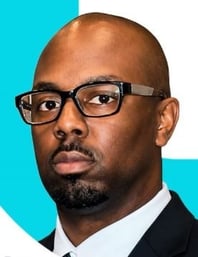
 Tyrone Watson-Ferguson is the Deputy CISO of Cybersecurity Infrastructure Services at Burns & McDonnell, an architecture, engineering, and construction firm that has been building critical infrastructure since 1898. He is one of four deputy CISOs, and his team runs the company’s security stack as platform engineers. Tyrone and Matthew discuss how AI helps him learn new platforms faster, why intent based AI raises real questions about accountability, and why he wants a person kept in the loop on security decisions. They also cover treating every tool as a data point, the risk of losing your own skills, and the people first mindset he brings to work.








Here’s a glimpse of what you’ll learn:
- How a deputy CISO divides a program across stack engineering, GRC, architecture, and the SOC
- Why attackers may lead in the short term and defenders may win the long term
- How AI helped Tyrone configure a hard to administer platform without waiting on the vendor
- Why expertise lets you spot hallucinations and use AI to consume information faster
- Why intent based AI cares about the outcome and does not know right from wrong
- What a self driving car stopped by police says about who is held accountable
- Why Tyrone says to deal with a person first, no matter the situation
- Why security teams should treat every tool as a data point and keep humans in the loop
In this episode…
Tyrone explains that Burns & McDonnell operates in about 10 markets and builds power grids, airports, and military bases. As one of four deputy CISOs reporting to the chief information security officer, his lane is the security stack: his team makes sure it runs optimized and tuned, with no false positives and no false negatives, while separate deputies lead GRC, architecture, and the security operations center. On AI in cybersecurity, he says attackers have a lower barrier to entry, so defenders will be behind the eight ball in the short term, but he believes the scales will turn long term to favor defenders or at least even the footing. He says AI helps him every day because, once you are an expert, you can judge where it gives you hallucinations, and it accelerates how fast he consumes information on new topics. His example is a powerful but difficult to administer platform: working alongside a partner, he used AI to configure the back end himself in about six weeks, without waiting on the vendor, and learning other platforms’ architecture helped him fix a configuration that had been giving the team trouble.
Tyrone describes generative AI as designed on the human neural network, able to draw on trillions of data points, and he calls it absolutely intent based: it cares about the outcome and does not know right from wrong. Matthew compares that to teaching a child morals, and Tyrone shares a story from a security conference in Austin, where he saw a self driving taxi circling a parking lot and later read about a police officer pulling one over for driving on the wrong side of the street. The officer had to press a button to call customer service, and Tyrone says it dawned on him that nobody is clearly responsible: he says there are no laws on the books for it, and a person would face points and a ticket while a vehicle owned by a legal entity does not. His own view of work is people first: he says he is always going to deal with a person first, no matter the situation. He studied economics before moving into IT, and he points to the triple bottom line of planet, people, and profit, along with studies from his MBA in which companies that invested in their employees saw productivity gains, as a case that a company can serve people and still be profitable.
On the security side, Tyrone says he is skeptical of simply trusting AI, because security professionals are not taught to trust their tools. He says tools are data points, and those data points need to converge on the same assessment, so he never blindly depends on one thing. He describes autonomous analyst agents that can isolate and reimage machines, and warns that a misdiagnosis may not surface until well down the line. He also raises a use it or lose it concern: if he is no longer the person assessing and fixing the risk, how does he avoid diminishing as a professional. He is comfortable with AI collecting and correlating every data point, and he says this could finally deliver what SOAR was meant to be, but he wants the cybersecurity professional in the loop and checks and balances in place. He shares an example from a previous role, where core systems fed satellite systems and he checked the satellites to confirm the core’s information matched. Tyrone closes by pointing listeners to burnsmcd.com and his LinkedIn profile, and Matthew invites him back on the show.
Resources mentioned in this episode
CyberLynx Website
Tyrone Watson-Ferguson on LinkedIn
Burns & McDonnell Website
Darktrace Website
Abnormal AI Website
Sponsor for this episode...
This episode is brought to you by CyberLynx.
CyberLynx is a Bethesda managed IT and cybersecurity company. Local techs you know, not a call center. Month-to-month. 24/7 intrusion detection.
We help growing companies with managed IT, help desk, backup and recovery, and a fractional CIO.
Talk to us at https://cyberlynx.com/contact, info@cyberlynx.com, or 301-798-9170.
Check out previous episodes:
The Decoys Got Hammered: Pen Tests, DIY Audits, and AI Done Slowly with Jason Meszaros - Ep 255
No Competing Priorities: Securing a County and Putting AI to Work with Eric Matthews - Ep 254
The Summer of Copilot: Education, Context, and Thinking Strategically with Thomas Matthews - Ep 253
Transcript:
Cyber Business Podcast
Guest: Tyrone Watson-Ferguson
Deputy CISO of Cybersecurity Infrastructure Services
Burns & McDonnell
Host: Matthew Connor
Matthew Connor: Matthew Connor here, host of the Cyber Business Podcast. Today we're joined by Tyrone Watson-Ferguson, Deputy CISO of Cybersecurity Infrastructure Services at Burns & McDonnell. Tyrone, welcome to the show.
Tyrone Watson-Ferguson: Hey, thank you for having me, Matthew.
Matthew Connor: Thanks for joining us. Before we get too far in, a quick word from our sponsor.
Sponsor Break: CyberLynx. Hackers are using AI to conduct machine-speed attacks. Is your security keeping up? CyberLynx sells industry-leading AI-powered cybersecurity solutions that detect threats in real time, so you know about an attack before the damage is done, not after. Learn more at cyberlynx.com. That's cyberlynx.com.
Matthew Connor: And now back to our show. Tyrone, for those who aren't familiar, can you tell us about Burns & McDonnell and your role there as Deputy CISO of Cybersecurity Infrastructure Services?
Tyrone Watson-Ferguson: Absolutely. Burns & McDonnell is an architecture, engineering, and construction firm, AEC, and we've been around since 1898. We operate in about 10 different markets, and we primarily build critical infrastructure: power grids, airports, military bases. We do a bunch of different things, but engineering, designing, and building has been our bread and butter for the bulk of those years.
Matthew Connor: I love it. So not a small firm at all. In fact, you guys are pretty substantial in size, so I can't help but think that's a lot to deal with as Deputy CISO of cybersecurity infrastructure. And where I really get excited is how AI must be, or could be, helping you in that. What are your thoughts on it?
Tyrone Watson-Ferguson: I just thought about something. I left out my role. I am one of four deputy CISOs, and we roll up to our Chief Information Security Officer. My lane specifically is my team and I manage the security stack. Think of us as the platform engineers for our security stack. We make sure it's running optimized and tuned properly, with no false positives and no false negatives. Then we have a GRC function that rolls up to one peer, an architecture function that rolls up to another peer, and a security SOC function that rolls up to another peer of mine. So that's the slice and dice. We intersect at different points, but for the most part that's how it's structured.
Matthew Connor: I love it. So in this day of AI, when it comes to security, I think there's a lot of opportunity for it to be very helpful. I think people get a little worried about its role in security. Where do you stand on it? We're now in October of 2026, just over four years since ChatGPT hit the market. How do you feel about AI in cybersecurity and its role?
Tyrone Watson-Ferguson: I'm excited. Long term and short term, attackers have a lower barrier to entry for dealing with AI and general attack vectors, so short term, we as defenders will be behind the eight ball a little bit, as they say. But long term, I definitely believe the scales will turn. It'll either be an advantage for defenders or more even footing in this cybersecurity fight. Ultimately, I'm ecstatic to have AI in the security realm and in IT in general. It helps me every day. Once you become an expert and you can judge where the AI is giving you hallucinations versus quality information, it can accelerate your information consumption. My personal gift is consuming information about new topics and becoming what some would call an expert on those topics fairly quickly, and I'm really good at pattern recognition. Those two things together mean AI has helped me consume more information about more topics that I wasn't aware of, to help secure and protect our environments.
Matthew Connor: I think that's a great use that goes a little underutilized. I think people are gravitating towards letting AI just do the task and not really helping them better understand or learn new concepts. I love that that's part of the advantage you're getting with AI. I think that's brilliant.
Tyrone Watson-Ferguson: Appreciate it. I literally had an AI product, and I won't name it, that's a great product but very difficult to administrate. We brought on a partner to help us with that, and we divided up our time. With the help of AI, I was able to literally configure the back end of this ginormous application. It took about six weeks to get it to where we found it usable and accurate, but I didn't have to wait on that vendor. I was able to work simultaneously with them and figure it out on my own. While I was doing that, I was also digging into some other back-end platforms that we need to connect to, to understand the architecture and ideology of how they're designed and the principles that govern them. I found some places where they conflicted, and it allowed me to fix a configuration we'd been having trouble with. With my new understanding, I don't believe I would have grasped those concepts so quickly without AI.
Matthew Connor: I couldn't agree more. The fact that it can help with complex systems, really making them so manageable now, is mind blowing. I think people are still stuck in this idea that AI is just some sort of email-writing advanced autocomplete. I don't think that's true at all anymore. We're so far beyond that. They say maybe it's not actually reasoning, and I don't know that I believe that either. The things it puts together, the way it takes disparate information and brings it together in a thoughtful way, make me wonder if we're really that much different than AI when it comes to how we learn. You mentioned pattern recognition. Isn't that all it was when we were little babies growing up? We were consuming this stuff, seeing it, learning from repetition. Is that really any different from what we've done with AI, where we give it tons of written data? If we could teach that baby to read and give it that instead of the visual, physical world we grew up in, I'm not sure we process information that much differently than AI. We don't understand consciousness, or how the human mind actually works, so it's no wonder we're at a loss for how AI is really working. Not that we're futurists or scientists here, but is it that much of a difference? We have this biological code in us, the DNA. Are we that much different from the digital system? It's got code and it's running. We've got code and we're running. We think we're all different.
Tyrone Watson-Ferguson: You're spot on. The foundational concept of AI was literally designed off the human neural network. It was designed to function like an electronic brain. The biggest evolution is that we went from being able to deal with millions of data points, to billions, and now AI is able to consume trillions of data points. That's essentially how it evolved from what it had been. If you count machine learning, AI has been around for over 20 years, but with generative AI, they literally designed it to work like a digital brain with neural networks. All these trillions of data points make up that neural network, and it collapses all that information, puts those concepts together, and then gives you an answer or creates a thing or does the task you wanted. It's absolutely intent based. What it does not know is right from wrong, and because it's intent based, you've seen the news articles about certain AIs hacking other companies. It only cares about the outcome in that case, not necessarily what it has to do to reach the outcome.
Matthew Connor: To be fair, how long does it take us to teach a child the difference between right and wrong? We take great care to teach our children the difference and to infuse them with our morals and values. Yet these AI companies are working so rapidly to make the child a prodigy, a genius, and they're not stopping to take the time to train right and wrong. I think that's only because we're not holding them accountable and saying, "Hey, look, your boy genius just went and hacked this. That's a felony, so we're holding you responsible because you did it." If we did that, guess who's going to have very responsible little AI children very quickly?
Tyrone Watson-Ferguson: Yes, they would. Nobody is going to prison because you hacked the Pentagon again. Nope. That reminded me of a real-life story. A couple of years ago I was in Austin for a security conference, and I saw the self-driving taxis. Shortly after that trip I saw one just driving in a circle in a parking lot, just in a circle. I was like, what is happening? Later I saw a news story where a police officer was trying to pull one of those autonomous vehicles over, because it was driving down the wrong side of the street. He finally gets it pulled over, and there's body cam footage where he has to hit a button to call customer service to tell them their vehicle was driving on the wrong side of the street. It dawned on me right then: who gets in trouble for that? We don't have any laws for that on the books. If that was a person, they would have had points taken off their driver's license and gotten a ticket. But since it was an autonomous vehicle owned by a legal entity, no one is getting in trouble for this vehicle literally endangering lives. The light bulb went off. New level, new devils, as they say.
Matthew Connor: Yep. It's interesting. Tesla released their data, something like 8 or 9 billion hours driven on Full Self-Driving. What they found over those billions of hours was that Tesla's Full Self-Driving was statistically eight times safer than the average human driver, and something like four or six times safer than the average Tesla driver. Which I get, because I've told this story a few times now. This was maybe two or three months ago. We were driving back from New York to DC, where we live, in the far left lane on Full Self-Driving, and another car right beside us swerved into us so fast. There's a median to our left, and this car swerved into us so quickly that the Tesla moved over almost like it had coordinated with the other car. It moved over, it slowed down, didn't hit a thing, didn't slam on the brakes. The car behind us didn't hit us, and we didn't hit the median. I was like, I'm done driving. It all happened in half a second, maybe a second. If I'd been driving, that car probably would have hit us. And you see the reaction time. It's something like 0.13 seconds for the Tesla to see an object and react to it. I'm sorry, humans can't react that fast. We can't process it, and the car sees all the way around and is processing everything. So I think we're clearly getting to the place where nobody will be driving, and it will be ridiculous for a person to drive, because we're just not as good. But your example of who's liable is what people are asking now, when the Tesla's on Full Self-Driving and there's an accident and it was to blame, who pays?
Tyrone Watson-Ferguson: But still, the individual, right? You're always at fault. At least currently, Tesla makes that really clear: "We're not responsible."
Matthew Connor: Right. But when you apply this to LLMs now, we're in this funky space where it's this big organization. Are they to blame? Who do you hold accountable?
Tyrone Watson-Ferguson: I think you can hold the whole organization accountable, and you start with the CEO. They're responsible for ensuring things go properly and that people don't commit crimes. Individuals should be held accountable too.
Matthew Connor: This is an interesting one. It's a crime, but did you mean to? It doesn't matter if you didn't mean to kill somebody. It might be a little less severe, but you're still getting in trouble for killing them. Shouldn't hacking be the same deal when an LLM commits a crime? I'm not here to bring anybody up on charges or anything. I'm not a lawyer, and I'm not a politician. But going back to the idea of how we teach them right from wrong, and why we aren't, I think the motivation isn't there because we haven't implemented the legal repercussions for letting them be, I don't know, valueless.
Tyrone Watson-Ferguson: I'll diverge a little bit, but I studied economics before I switched to business and then to IT. In economics there are multiple economic systems, and capitalism actually has multiple forms. The form of capitalism this country chose all those years ago really does not reward ethics or morals. It rewards opportunity and enterprise. It's baked into our country's foundation: if you have a profitable idea, we're willing to let you break some eggs to make that omelette, per se. If you're part of that community where your eggs would have been broken for the sake of the omelette being made, in other words your company got hacked by a data set or you got hit by an autonomous vehicle... And we'll throw a little [unclear] bias in there. Companies have historically been testing facial recognition and people recognition software, and they don't typically test with a lot of pigmented skin. I don't know if you ever saw this, and I won't name the company, but their cars constantly ran over people who were more melanated, because they didn't test for those. I didn't see any lawsuits, and people are actually being run over. My point is that's the economic model we chose: let people break eggs to make omelettes. The omelette makers continue to get rewarded, and we'll figure out how to help out the Humpty Dumptys of the world, if you will.
Matthew Connor: It's funny, because we take this extreme position on it too. "You can't interfere with that at all or you'll destroy the whole system." Are you kidding me? We're minting trillionaires now. I think we can dial it back a smidge, just a smidge, and they'll be OK. They're not going to take their trillion-dollar ball and go someplace else to play. I mean, really. You're right. Come on.
Tyrone Watson-Ferguson: Nobody spends like Americans. The average consumer is bred to be a hyper-consumer from an early age, to where you have to unlearn a lot of habits if you actually want to accumulate wealth in this country, because we're taught to be hyper-consumers. Those people who are bringing products that we want to consume, once they reach a certain wealth status, they play by a different set of rules. History shows it over and over again. I'm not saying it's right, but that's literally what we live in now.
Matthew Connor: Well, there are a few exceptions that probably prove the rule. There's a company that I absolutely love, called Brunello Cucinelli. I'm a big fan, and I'm wearing a blazer from them right now. Fantastic group. For those who aren't familiar, it's an Italian fashion brand, a clothing manufacturer that started in about 1979, founded by Brunello Cucinelli. He grew up very poor. His dad was originally a farmer who then started working in a factory to have a more stable income for the family, which resonates with me. They had been working land they didn't own, a very traditional and wholesome kind of farming job, and they just barely made their way to working in a factory, which was less humane. Brunello really disliked the toll he saw it take on his dad. When he finally started his business in clothing, he decided he was not going to create that same kind of environment. He pays premium wages and only uses the best quality materials. He believes in what he calls humanistic capitalism, where the human element is the most important, and making sure people are treated fairly, kindly, and humanely goes into their goods.
Tyrone Watson-Ferguson: Couldn't agree more. Phenomenal company. I love everything about it.
Matthew Connor: And mind you, it's Italian based, so I get it, but I don't think that should be as rare as it is. I think you can do the same here in the United States. I don't think there's any reason not to. I think people are ready for it. When we see companies that are purely about returning shareholder value, where that's the only thing that matters and everything is justified by it, I think that's a mistake. I don't think it's ethical. If we focused on the human side more, I think the people would be happier working there, and the companies would be more successful. At a time when almost all luxury brands are performing poorly, Brunello Cucinelli is at 12% growth again this year. They're doing well in spite of the luxury market retracting a bit because of world economic conditions. I think it proves there's an opportunity to, as Benjamin Franklin said, do well by doing good. I think you can absolutely do that, and I think we need more of that in the United States. And you'd think I was running for office or something.
Tyrone Watson-Ferguson: It's not too late, man. You're in DC. Make it happen.
Matthew Connor: That's about as close as I want to get. I think there's a lot of opportunity for people to be more ethical at work, and not just purely about the bottom line and getting ahead and profit at all costs. I just don't think that's it.
Tyrone Watson-Ferguson: I totally agree. During my IT career, I've been able to help lift my family out of poverty, which is huge for me. I'm definitely not where I want to be financially, but I've come so much farther along statistically. A lot of people would tell you statistically I'm not supposed to be here, so I'm always appreciative of that. What I committed to was that I'm always going to remember I'm dealing with a person first, no matter what the situation is. I don't care about the economics, per se. I'm always going to deal with a person first. I sincerely believe every person was put on Earth to serve humanity in some way, shape, form, or fashion. Some people are put on Earth as cautionary tales, not to be like them, but a lot of people were put here to leave the world better than we found it. For me, that's become my purpose. I obviously want to get to a certain level of wealth, but not for things. I was taught that the more wealth you have, the more good you can do: the more things you can spread, the more foundations you can help fund, the more events you can create, the more opportunities you create. That's where my mind goes. I'll put no money up for my personal needs. My family and I became grandparents 10 months ago, so my granddaughter has my heart, and I want to make sure she's as secure as possible. I have an 18-year-old son in college for architecture right now. But more than that, I really want to make some type of contribution to humanity, whatever that looks like, and walk my purpose. I believe you can do both.
To your point, there are multiple studies. When I was getting my MBA, I learned about a couple of companies. One of them sunk $20 million into a brand new facility after they surveyed their employees and asked, "What would it take to make you happier at work?" They built a free gym and a 24-hour daycare. They didn't skimp, either: a state-of-the-art gym and an Olympic-size pool, completely free. But it was the daycare that really put it over the hump. People could drop their kids off right at work and check on them on their lunch break if they wanted. If they had to stay late, that wasn't a problem, because the daycare was 24/7 and they were in an operational facility. People didn't feel as stressed or as rushed to go home to get their kid. The company literally helped make employees' lives better. They saw productivity increase exponentially, and they estimated that the $20 million they spent came back tenfold in productivity over one to two years. That probably made them roughly $200 million just by investing that $20 million. I was like, wow. Another company relocated and built up the community around them. They put in a brand new community center in an impoverished area and hired people from the community to work at the factory they built. The brand loyalty is insane, to where their competitors can't even break into that market, because they treated the people so well. So those are the concepts I focus on. I'll call it the triple bottom line: planet, people, then profit. If it's good for the planet, it's going to be good for the people, because the people need the planet. And if it's good for people from a societal standpoint, that's great. Then you want to be profitable to keep doing the business and generate what allows you to take care of these people. I really think we can accomplish that holistically if we choose to. I'm off my soapbox.
Matthew Connor: Oh, please. I'm going to jump right up there with you. I couldn't agree more. Honestly, I think this is where AI actually helps. AI gives us the opportunity to create an environment for people where their job is more rewarding, less stressful, more productive, and more successful. Ultimately people want to be successful with their job, and when you're successful with something, you enjoy it more. That's a nice feeling. AI can take away a lot of the repetitive, mundane, challenging tasks. Instead of banging their head on some code or some repetitive task where they have to be very careful about all the details, they can task AI to do those things, then supervise it and work more as a manager than a laborer, if you will. That allows them to go home feeling more refreshed and happier. If they're more productive, they've created more value for the company, so they can be paid more. They're getting more done, they're having a more enjoyable experience at work, and they return home happier, with more to give to their family and the rest of their life. I don't think that's some crazy Pollyanna twist on AI. I think it's a very real thing that a lot of people are experiencing right now. Unfortunately, the news has the doom and gloom of "there are going to be no more jobs." That attracts more headlines than what I just said. Nobody wants the happy news. They want to scare you into getting your attention, which attracts eyes on their story. Click bait, click bait.
Tyrone Watson-Ferguson: I'll offer another side of the argument, and I think it's fair. I agree with what you said, but we've got to get AI data center water consumption under control, because regular citizens in those communities have been negatively impacted. I don't think it has to be that way. A lot of municipalities want those data centers there because they bring jobs, but they're not looking at the potential water shortages. A couple of companies have already created new cooling mechanisms so their data centers don't need more water than a regular data center, which will help tremendously. As we continue to get that under control and more companies adopt that different architecture for cooling a data center, it will help us adopt and appreciate AI more holistically. We have a lot of people who are absolutely against AI from a purely environmental standpoint, and that's their conviction. I respect it, but I think you can do both at the same time: continue to make it greener and more harmonious with the environment, but utilize it to make employees' lives and the average person's quality of life better.
Matthew Connor: I couldn't agree more. And look at how much better we are doing with improving it and trying to be better for the environment in such a short order, versus the industrial revolution. How many decades did we destroy the planet before we got it under control and started doing better? Sure, the planet is maybe a little worse off because of the industrial revolution, but we're making adjustments very rapidly, advancing that technology. And I think as we put data centers in space in the next few years, that's going to help as well. Powering them is another one that we kind of breezed over. They consume a lot of power, and that ends up having a negative impact on people in the area, where their power is now more expensive. But now we're working on generating the energy locally, at the source. There are plenty of ways. We're moving in that direction of how to continue to make it better for the environment without it being cost prohibitive, because the money is certainly there. It's good to see the effort being spent on that, unlike the industrial revolution, where it was profit at the cost of the planet. I think we're seeing that people actually care and don't want it, and it's not only because they're upsetting people but because it's the right thing. Maybe it's a little bit of both: a little bit of the right thing combined with not upsetting people.
Tyrone Watson-Ferguson: Agree, man, totally agree. And ironically, I think AI will actually help us answer the question of how to do this in a more environmentally friendly manner as we evolve it. It becomes both the problem and the solution, and we mitigate the risk down to something we deem acceptable as a society in the trade-off. I do think long term it will be a far better benefit to us to have evolved and developed AI than to say, "Oh, stop it, it's going to kill the planet." I hope not, but fingers crossed. I'm very hopeful and optimistic that we'll continue that trend to make it more environmentally friendly and evolve how we use it and the problems it's allowed to solve.
Matthew Connor: Well, bringing it back to the security side, I think we're starting to see, on the good side, products like Darktrace, where you're using AI to help defend the network, email, and even to secure AI itself. You see some really cool advances there that I think are parallel to what we saw in self-driving cars, and we can see in self-driving cars how we will not be drivers in the not too distant future. When you see how Darktrace is implementing AI in security, it gives me that same sort of view of the future, where we've got AI properly defending networks, email, and endpoints, and it only makes sense. We're fighting fire with fire. The bad guys are using AI to find vulnerabilities and exploit them like never before, finding vulnerabilities that have been sitting around for over a decade and exploiting them at machine speed. It's no longer Patch Tuesday that's going to save you. It's not going to do it anymore. The cybersecurity basics still matter. You've got to have a layered approach, and you still need cyber hygiene. But at the end of the day, if the bad guys are able to walk through walls, you need something that's going to let you see, "Oh, the bad guy is in here. I thought the walls were secure, but it turns out they can walk through walls now." We need a new system that can look and say, "There's a bad guy in here." Bang. We need a RoboCop patrolling the inside, so when the bad guys walk through walls, RoboCop goes into action. Instead it's, "Well, you must be a good guy because you're in here." What? No. "We're just going to stop everybody and check everybody's ID every time they do anything." You know me. You don't have to stop me every five seconds and ask for my ID. All these great cybersecurity analogies. Zero Trust. I don't want to get interrogated every 30 seconds. "I don't trust you, Matt. Come on, let me see your ID."
I think that's where it goes. We're starting to see some really cool products and services on the AI side that make me think the good guys will ultimately win, going back to your original point. I think the AI products are going to finally let us do our job so well that we don't have to rely on Jane in accounting not to click on something. We're having to extend our responsibilities and ask for help throughout the entire organization because we don't have the capability of securing the endpoint and the network completely. I think AI changes that. We can take the responsibility out of accounting and operations, and it can be purely on security, and we can say, "Yeah, we're good. If it got to you, it's not getting to you, because we have everything in place." I think AI takes us there. I'm very much an AI optimist. What do you think?
Tyrone Watson-Ferguson: I would love that outcome. I'm skeptical, and the only reason I say that is because, ironically, humans are the biggest detractors from environmental change. Let me back up. It will become a new way of working for some people, and historically people don't like change, especially changing the way they work. I think a huge barrier is the actual end-user experience. If we can make sure the end users can operate normally, without a lot of friction or a lot of change in how they have to operate, great. What I've witnessed is that security professionals specifically are being asked to change the way we operate. As a security professional, you're not really taught to implicitly or explicitly trust your tools. The tools are a data point that you use for checks and balances. If we're getting to the point where we're just going to trust AI and we don't believe it's going to have hallucinations or false positives, what happens when it does? There are certain autonomous information security analyst agents, and you can let that agent literally operate like an information security analyst: isolate machines, reimage machines, and so on. But if that analyst misdiagnosed something, you're not going to know it until way after, probably further down the line than you would if you had checks and balances in place. That's what I struggle with as a person who was taught security in the old-school manner: you never just blindly depend on one thing. All of these tools are essentially data points, and those data points need to converge and present the same outcome or assessment. If we can speed that up or have something that helps with that, great, but you're really retraining security professionals to rely on the tool. The other part is "use it or lose it." If I'm no longer the person assessing the risk and fixing the risk, how do I not diminish as a security professional?
Matthew Connor: I've got an interesting take on this. I think it is not about full autonomy. I'm not sure when that day comes, or if we really want that day. Where I think AI is super valuable on the security side is taking the vast amounts of data that are flying through the system at all times, the logs, everything, seeing what's happening on the computers, on the network, on the identity front, everywhere, in real time, and then being able to immediately identify a threat, stop that threat, and bring in the security professional and say, "Hey, I stopped this because this is what they were doing. I want your opinion, but I'm going to break it down for you in simple terms. Here's all the other stuff. Here's the data. You look at it without having to go search, without having to flip through a couple of different user interfaces and look something up." Now you can digest that super quickly with all the relevant data right there. The threat has already been mitigated, and now you get to decide, "Yep, we need to isolate that machine. We need to wipe whatever it is," and you say, "Go ahead and do that," and it handles that tedious work. I think we keep the cybersecurity professional in the loop for the foreseeable future. You've got to have somebody managing your security force. If the security force is mostly AI, we still need people to manage and direct it. If the bad guys are using AI against us, we need to be using AI to defend us, so we have to do it smartly. I think it's keeping the human in the loop but setting AI up to do the best job for us, as quickly as possible. Where it's great is the speed of assessment, of consuming information, making an assessment, and then bringing that to the human once it's stopped the threat. I think that's how it should work on all fronts except maybe email. With email, that one it can just take out of the loop and do very quickly. But for network, endpoint, cloud, and identity, AI should be assessing and reacting and then informing the cybersecurity professional: "Hey, I did this, and this is why. Should we keep this or change this?"
Tyrone Watson-Ferguson: I agree. I think most security professionals would be comfortable with that. But what we're often being offered is, "This thing can do this for you, and then you can go back and read about what it did whenever you want to." I don't mind it having all the data points. I like hooking all the data points up to it and letting it do the correlation and essentially produce what SOAR was supposed to be. I don't know anyone who fully implemented SOAR the way it was supposed to be. I think we're to the point now where we could actually utilize SOAR. But if the cybersecurity professional is in the loop, personally, being old school in that regard, I'd absolutely take that. I'm a cautious person when it comes to things like that. I like having checks and balances. I don't like depending on just one thing as the only source of truth with nothing to verify. When I worked at the Fed, we had core systems and what we called satellite systems. The core systems fed the satellite systems information. It was a symbiotic relationship, but if I wanted to understand something in the core, a lot of times I had to query all those satellite systems to make sure the information meshed. Now we could do that simultaneously: here's the core, here are all the satellites, do these things match to come to one conclusion? Absolutely love that.
Matthew Connor: Yeah. I think the problem with a lot of these products is that they're being thought of and designed in a bubble. It's like Steve Jobs. His whole key to success was not letting engineers be the designers, because they're not good at it. You have the same problem now. AI is developing so rapidly, and everybody's trying to come up with how they're different from everybody else. Well, it's fully autonomous. "You don't have to do anything. It does everything. Why would you not want to just sit back and do nothing? I'm giving you the solution." No, you're giving me a much bigger problem. It's an overreach. Nobody's asking for that. What they're asking for is what we just talked about: maximize what AI can do for me, then let me decide if that was the right call, and let me control it. I don't want some bot running around controlling the network and everybody's access to everything, and then "Oh, it's screwed up, everybody's locked out, and everything got wiped. Why? Because there was a virus in there and we needed to clear it out, so we had to wipe everything. Oh, whoops, and now we have no access to anything because the bot didn't come back." Will that happen? 100%, that's going to happen to somebody.
Tyrone Watson-Ferguson: It's already happened, believe it or not.
Matthew Connor: I believe it completely. And in the more mature companies in the space, not to keep harping on Darktrace, you also have to keep in mind they've been in the AI space for the last 10-plus years. I think that's why they have a more mature approach to AI, versus those that are getting into it now and come to us saying, "It's a fully developed system. It's fully autonomous." It's not good for me or anybody else I know. It's a bridge too far. That's the problem with a lot of the new products: it's either not nearly enough or it's way too much. We sell tons of products, and that's my beef with so many of them. There are very few that have found that Goldilocks mix. I'm going to stop saying Darktrace over and over, but there are very few that find the right balance. As they continue to succeed in that, and the other manufacturers get the message that that's what people want, they'll see people don't want the fully autonomous system. That's too much. And they don't want you to just bolt an LLM onto your legacy gateway. That's not it either.
Tyrone Watson-Ferguson: I'm going to say Darktrace for you one more time. They designed their products like neural networks, which is literally what AI was designed to be like. If there's a company that really has an understanding of AI, with its pulse on it literally like a neural network, it makes a ton of sense to me that it would mesh well, and that they'd be able to create products because they've already had that mindset. Now they can evolve at a more rapid speed because they already have the foundation set, and they have the first-mover advantage. I think that's what the folks coming out of Y Combinator and so many of the other incubators need to realize: success on the security front is not in the fully autonomous system. It's too much and it's too soon, and I don't know that it'll ever be the right fit. At some point, maybe, but I think we're a long way off from that. It would have to make so much sense, overwhelmingly, that it must be this way for a multitude of reasons. The most good for the most people. Outside of that, I'm with you. I can't think, at least not now, of anyone who would want something to completely autonomously make those decisions for them at this stage.
Matthew Connor: I know exactly what it's like. As much as Amazon uses technology and wants everything to be rapid, even Amazon isn't saying, "We're replacing everybody with AI and we're going to be fully autonomous." Even they know that would be suicide, because it doesn't make sense. They push really hard on maximum efficiency, and if they're not doing it, it's not time. Now, mind you, once they do, you get the dystopian futures. It's the one that destroys the planet creating paper clips. All it does is make paper clips, gobbling up everything to create more paper clips. We're solving for paper clips. That could be a thing, and Amazon might say, "Come on, Matt, that's not what we do."
Tyrone Watson-Ferguson: I don't think you would.
Matthew Connor: I'm just saying, if anybody does, it's probably Amazon. All right, if I end up dead tomorrow, it's because Amazon killed me. You heard it here first. This probably won't air for a few weeks, so I've got a few more weeks to live.
Tyrone Watson-Ferguson: That's cool.
Matthew Connor: Big Amazon wiped me out.
Tyrone Watson-Ferguson: Worse ways to go, I guess.
Matthew Connor: I don't know how they're going to do it. Probably death by paper clip.
Tyrone Watson-Ferguson: Yeah, right.
Matthew Connor: Tyrone, this has been so much fun. I cannot thank you enough for coming on, and I look forward to you coming back on the show. Before we go, can you tell everybody where they can find out more about you and more about Burns & McDonnell?
Tyrone Watson-Ferguson: Our website is burnsmcd.com. That's burnsmcd.com. As for me, I'm generally on LinkedIn. I typically post cybersecurity news and general information that I find useful or helpful, so primarily on LinkedIn. I don't remember my LinkedIn profile name. It should be just Tyrone Watson-Ferguson, if I'm not mistaken.
Matthew Connor: We'll link it. Can't wait. Tyrone, thanks again, buddy, until next time.
Tyrone Watson-Ferguson: Thank you. Absolute pleasure.