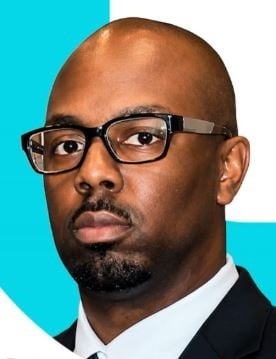
Ralph Hogaboom is the CISO of the Washington State Department of Natural Resources (DNR), an agency of roughly 1,800 to 2,300 employees that manages more than 2 million acres of forested land and carries wildfire responsibilities. He describes DNR as something like 65 agencies stapled together. Ralph and Matthew discuss how a book on automobile traffic gave him a new way to think about AI, from who is held accountable to what controls an AI agent needs. They also cover a license and registration idea for AI agents, why he prefers human in the lead, and who ends up paying for AI shortcuts.








Here’s a glimpse of what you’ll learn:
- How DNR's work spans wildfire response, aquatics, landslide preparation, and tsunami towers
- Why people trust their own AI output but distrust everyone else's
- What the exonerative tense reveals about blaming tools instead of people
- Why road lines and traffic rules are infrastructure, not obstacles
- How a city traffic guideline doubles as a cybersecurity controls framework
- Why developers with administrative privileges are driving at freeway speeds in residential areas
- Why Ralph wants license and registration for autonomous AI agents
- Why human in the lead beats human in the loop, and who pays for AI shortcuts
In this episode…
Ralph explains that DNR employs anywhere from 1,800 to 2,300 people depending on seasonal wildfire hires, and that its work includes helicopters, planes, fire trucks, aquatics teams, landslide preparation, tsunami towers, and drones that cover 62.5 square miles a year. Asked about AI, he says it is complicated, then describes a book on automobile traffic he read on a flight home from a conference in Atlanta. He says drivers see their own car as an extension of themselves and other drivers as objects, and that AI users do the same: they trust the code they wrote with Claude while distrusting what other people generated with it. He also describes a researcher's term, the exonerative tense, in which a headline says the car jumped the curb instead of saying the driver struck a pedestrian, and he says AI companies are starting to talk the same way when they say their frontier model did something. He says society has decided the juice is worth the squeeze on AI's ethical concerns, the way it accepts the risks of cars.
Ralph argues that regulation is closer to infrastructure than to a hindrance: trucks reach a store to deliver goods because traffic rules give each driver a fair turn, and he says that for AI, we haven't told them what the limits are. He describes a city traffic and pedestrian guideline that breaks controls down by the type of road and the intention of the traffic, and he calls it accidentally a really good cybersecurity document. On residential streets, where everyone is already going slow, staff using Copilot to tune up reports and draft emails need fewer controls. He says developers with administrative privileges are different: they are driving at highway speeds in residential areas with data that can hurt people, and today's AI lacks the limits that would stop a sharp turn at freeway speed. He adds that infrastructure costs money, which is why streets are rarely over engineered. Traffic lights existed before there was a standard for them, so he sees the field as being in the very early stages of a traffic handbook for AI.
Ralph says what he wants is vehicle registration for autonomous AI agents that live in an enterprise, not for people using AI to draft their own emails. He compares his home lab, where he gave Claude an administrative token to tighten his single sign on setup, to driving an unregistered tractor on his own farm, fine on the farm but not on the road. If an agent pulls data from a database and reinserts it, he wants the equivalent of a traffic cop to pull it over and ask for its license and registration, with a chain of custody showing what it accessed, and unlicensed agents shut down. On oversight, he prefers human in the lead, a phrase used by people in Washington state government, over human in the loop, and he argues that checking 100% of an AI's output every time defeats the purpose. He says a system with zero risk is irresponsible, because buying technology for reward means accepting some risk, and he relays a keynote arguing that an AI agent should have a supervisor and a performance review. He also frames AI as constant capital, an investment people use to create value, which he says is removing the need for some jobs rather than replacing people outright. He closes on uninternalized externalities, where shortcuts taken by some are paid for by others. Ralph points listeners to dnr.wa.gov, DNR's social media, and his LinkedIn profile, and Matthew invites him back on the show.
Resources mentioned in this episode
CyberLynx Website
Ralph Hogaboom on LinkedIn
Washington State Department of Natural Resources Website
Darktrace Website
Abnormal AI Website
Sponsor for this episode...
This episode is brought to you by CyberLynx.
CyberLynx is a Bethesda managed IT and cybersecurity company. Local techs you know, not a call center. Month-to-month. 24/7 intrusion detection.
We help growing companies with managed IT, help desk, backup and recovery, and a fractional CIO.
Talk to us at https://cyberlynx.com/contact, info@cyberlynx.com, or 301-798-9170.
Check out previous episodes:
AI Does Not Know Right From Wrong: Accountability and Oversight with Tyrone Watson-Ferguson - Ep 256
The Decoys Got Hammered: Pen Tests, DIY Audits, and AI Done Slowly with Jason Meszaros - Ep 255
No Competing Priorities: Securing a County and Putting AI to Work with Eric Matthews - Ep 254
Transcript:
Cyber Business Podcast
Guest: Ralph Hogaboom
CISO
Washington State Department of Natural Resources (DNR)
Host: Matthew Connor
Matthew Connor: Matthew Connor here, host of the Cyber Business Podcast. Today we're joined by Ralph Hogaboom, CISO for DNR. Ralph, welcome to the show.
Ralph Hogaboom: Hey, thank you. Glad to be here.
Matthew Connor: Glad to have you. Before we get too far in, a quick word from our sponsor.
Sponsor Break: CyberLynx. Hackers are using AI to conduct machine-speed attacks. Is your security keeping up? CyberLynx sells industry-leading AI-powered cybersecurity solutions that detect threats in real time, so you know about an attack before the damage is done, not after. Learn more at cyberlynx.com. That's cyberlynx.com.
Matthew Connor: And now back to our show. Ralph, for those who aren't familiar, can you tell us about DNR and your role there as CISO?
Ralph Hogaboom: Yeah, absolutely. DNR in Washington state is anywhere from 1,800 to 2,300 full-time employees, depending on seasonal hires for wildfire season. We have wildfire responsibilities. We've got over 2,000,000 acres of forested lands. We have helicopters, we have planes, we have fire trucks. We stash fuel in the woods, because by the time you fly a helicopter out to Spokane, you're already out of gas and you need to fill it back up. We have aquatics teams. We do landslide preparation. We have tsunami towers. We send drones out to cover 62.5 square miles every year looking at subsurface compositions. We've got scientists doing work around eelgrass growth and recession. We've got scientists who are really, really heavy into Python and doing super cool stuff. It's like 65 agencies stapled together.
Matthew Connor: Wow, super cool. That's fascinating. I think that's probably the most interesting intro we've had in 250-some guests, not to insult the others. Talk about a wide breadth of area to cover. That's amazing. As CISO, obviously security is first and foremost, and it's one of my favorite topics, especially in today's day and age with AI. So we'll get right out there and ask what is your take on cybersecurity in this modern AI age? Are you pro-AI for security? What's your take?
Ralph Hogaboom: My take is that AI is complicated. Let me say it a different way. I just got back from a conference in Atlanta, and it's about a five-hour flight from Seattle. On the flights both there and back, I thought I'm finally going to dig into a book on automobile traffic, because it has nothing to do with AI and nothing to do with technology. It's going to give me a break, right? It was written in the early 2000s, or at least the edition that I have was. The first couple of chapters start talking about human perception of being in a car. You see the car as an extension of yourself, and you see other drivers as objects. "That Honda cut me off." Well, me getting cut off is my car, and I see that as me, but the thing that cut me off is this Honda or this other vehicle. And I thought, oh my God, this is about AI. People say, "Well, I wrote this with Claude, and I know that humans have to review all of their code, and of course I trust me to do that." But you can't trust these other people. "What they're writing is terrible. You can't let people put this shoddy stuff out there, but you can trust me." I wrote this code, but that thing was generated by Claude. Claude made the problems in that other person's work. Like OpenAI talking about the Hugging Face incident, where their frontier model hacked Hugging Face. Well, I'm sorry, I thought we said that a human was always responsible for a computer's decision. The parallels just went on from there. So how do I see AI? I think it's like traffic. I think it's like automobiles.
Matthew Connor: That is spectacular. You're making my job fascinating. I think that's a wonderful response. I'm glad you brought up ChatGPT, OpenAI, and Hugging Face, because I couldn't agree more. Look at the way we are, let's say, raising AI, and suddenly it has no values. Well, it's because we've spent no time focusing on raising this thing to have values and morals and ethics when it goes and does stuff. Instead we said, "Here's a goal, go accomplish this goal." Obviously anything would, if that's all you've given it, very limited parameters, and you've given it access to the internet. I think we're probably in agreement, but I'll put a fine point on this. If we were to say that you are 100% responsible for what your AI does, and you're going to be held to account if you have Claude go and hack the Pentagon, guess what? You don't get to say, "Oh, it was Claude, it wasn't me." So why should OpenAI get to take the position of "I need to be regulated"? No, you need to be prosecuted, is what I think.
Ralph Hogaboom: I think you're wrong, and I don't think that's what's going to happen. I think the way OpenAI handled it, they're reading the room better than we are, and that is the way going forward. I think the FTC opened some investigations into Anthropic and OpenAI from their consumer protection side within the last week or two. Matthew, I scanned the headline. I didn't read the article. I believe that happened because of their promises about safeguards. Is that consumer fraud? They said there were safeguards, and then this thing happened. That's the angle I think they're taking, if I'm remembering the headline correctly. But I think OpenAI is more in alignment with how the future is going to shake out than we are ethically. I agree with you that if your software commits a felony, a human being should be held accountable for that. There's a researcher who released a paper, going back to the traffic analogy, where she examined headlines for automobile and pedestrian or automobile and cyclist collisions, and she coined a term, the exonerative tense. It means you stop talking about the driver and make an excuse in the way you frame it. "The car jumped the curb and struck the pedestrian." Well, hang on a minute. The driver was driving that car and used the car to strike a pedestrian. But when we frame it as "the car jumped a curb," it's like a wild bull in the city. They do whatever they want. It's an act of nature, really. The driver is not responsible for striking that pedestrian.
I'm a driver and a cyclist and I walk a lot, so I fit into all these categories, but we as a society have decided that if you're a driver and you strike somebody, the legal fees, the fines, and the jail time are so much more reduced than if it was accidental homicide through a different method. We let car drivers off the hook constantly. And when you think about AI, there are some ethical concerns, right? It hurts people's cognition. There's damage to the environment, carbon and water consumption. There's bias and disinformation. There's statistical rounding, hallucinations that damage your results. We've decided all of that is acceptable and we're going to move forward, just like we've said, "My car puts out CO2, my car will occasionally hurt somebody, I have to pay for insurance, I have to buy new tires, I have to get a license and a license plate." We've decided that all of the ethical concerns around automobile use are acceptable because it gets me somewhere faster. We've made a risk assessment and said it's worth it to have a car. I think we're doing the same thing, and you're going to see more of this exonerative tense, where an AI company says, "Our frontier model hacked Hugging Face. We had nothing to do with that." I think they're going to get away with it, because we as a society have decided that the juice is worth the squeeze.
Matthew Connor: Yeah, I totally agree on that front. I think 100% they are doing that to limit their liability and to get people to focus on that instead of the, wait a sec, you should be held responsible for this. You should be doing a better job of ensuring that you put in the proper safeguards and gave it the right instructions, instead of just letting it run free and then later finding out it did bad things. I think that's a mistake. Let me say that I'm not a big fan of regulation in general. If I had to choose between over-regulating and under-regulating, I'd probably choose under-regulating, even though that's probably a mistake and bad people will do bad things. I get it. But as a general rule, I'm not immediately like, "Yes, let's regulate that." In this case, though, I think if we had more consequence and more responsibility, we would take the extra little bit of time to say, "Let's not just put safeguards on, let's raise AI to be ethically sound, instead of running so fast." I get it, there are a lot of pressures to compete and develop the model as quickly as possible, but can we not at the same time be working to impose those ethics? I don't think it would slow us down much at all to put on those kinds of ethical safeguards. I could be wrong. I don't build frontier models, but I think any mild delay would be worth it in terms of the ethical output. And I would think it's most likely going to be Anthropic. If it could be done, they would likely be the ones to do it and say, "Look, we did it ethically. Our models all come out morally sound, adhering to these sorts of morals. Why can't yours?" They haven't, so it makes me wonder if I'm probably missing something.
Ralph Hogaboom: The framing of expected losses around LLMs and AI technology, using the word "ethical," I think is less focused than other framings we have available. And the regulation point you mentioned is an interesting one. Let's keep going with this car and traffic methodology, because I'm not quite done with the book and I will probably continue to bring it up, because I'm still thinking about it. Do you think of the white stripes on the side of the road as over-regulation? Do you think of the signs and the crosswalks as regulation that's getting in the way of you getting stuff done? The way trucks get to Target in town to deliver their goods is because they have regulation that lets them get through. They get to a stoplight and they get their fair turn to move through. They are way slower than the other cars in the city, but that regulation enables the delivery of goods. When I think about regulation around AI, you're talking about ethics. We haven't spent enough time training AI on ethical concepts. I think of it more in terms of limitations. We haven't told them what the limits are. We haven't set appropriate limits, and that's regulation. We haven't told it, "This is the road that you drive on, and you go somewhere." OK, I have to talk about a different traffic paper for a second, Matthew.
Matthew Connor: Let's do it.
Ralph Hogaboom: The city of Pinecrest, Florida, a year or two ago published a 60-page traffic and pedestrian guideline. I read it, and it has come back to me while I'm reading this traffic book, because I think it's accidentally a really good cybersecurity document. They break traffic controls down based on the type of road and the intention of the traffic. If you're on the freeway, the controls you would put in place are things like very gradual curves and limiting the on-ramps and off-ramps. You can't open a coffee stand on the side of the freeway or the highway. It's not for that kind of traffic. It's to keep things moving quickly, with wide lanes, and to be able to safely turn corners and get somewhere at high speed. When you look at a street and they're talking about controls, you can think of these like cybersecurity controls or any other kind of control. They're saying that residential streets have cars parked on both sides, which is already limiting the space. The cars that drive through are already going slow. You don't need a dedicated bicycle lane, because the bikes can ride down the middle of the street, since the cars are going slow enough that there's not going to be an incident. There are kids playing with balls bouncing across the street. The traffic already understands that context, and people are moving a lot slower.
As I'm reading this traffic book, I'm thinking, oh, this is like folks at my organization using Copilot to tune up their reports and help them draft emails. This is the residential street, where I actually need fewer controls. People are already going slow enough and safe enough. That's not a concern. Developers with administrative privileges are driving at highway speeds in residential areas with data that can hurt people, and I don't have any controls around that. This is the kind of regulation, or the ethics training, or how do I get them to only do very specific things? You can't take a sudden left or right turn on the freeway. The controls don't allow it. The road doesn't go there. With AI today and the lack of limitations, we allow developers to take a sharp right in the middle of the freeway, going at freeway speeds, in a residential area.
Matthew Connor: That is spectacular. Profound. I think the analogy is so great. I'm still reeling over the fact that you compared the lines on the street to regulations. That's a profound analogy and it's just spot on. The reality is, I'll speak for myself, I and many other people get caught up in this idea of not having government regulation tell you what to do. But where would we be if the roads had no lines on them? We would not be as far along as we are. It would be far more dangerous. It wouldn't work. That's fascinating. I guess the worst-case scenario is over-engineering it, where there are bike lanes and pedestrian lanes and all these other things on that slow street, and now you've over-regulated. But we don't do that, right? As a general rule, you don't see that.
Ralph Hogaboom: Yeah, and I think a lot of that is driven by budget. Infrastructure, whether it's policy or culture, organizational change, industry culture and standards, or pavement that you're putting down on the ground, takes something to build. It costs you something. The reason we don't have over-engineered streets is because it's expensive. I think the same thing is going to be true of the governance and oversight as we all get on board with this new technology that is ripping through things right now. For a long time in North America and the United States, we didn't have standards for intersection traffic lights. We had traffic lights before we had a standard for them. In some cases they were blue and orange, because people were thinking about color blindness, since some people can't distinguish red and green. In some cases it would go red to amber to green to amber to red, to warn you that it was about to turn from red to green. These things are still being changed. Traffic engineers are changing the amount of time in a four-way intersection that all the lights are red, to account for driver behavior, because people are more likely to run a red light. They're extending that, which of course causes more traffic, because the capacity of the intersection drops the longer you have four reds. People are still making changes. We haven't solved traffic. I think we're in the very early stages of what's going to be our traffic handbook for AI.
Matthew Connor: I think you're right. You seem to have a pretty good grasp on this. Where do you see it going, or where would you like to see it go, versus where do you think it's going?
Ralph Hogaboom: Where would I like to see it go? I would like to see vehicle registration for AI agents, not for human-in-the-lead interactions. Go back to the person on the residential street who's using Copilot or Claude or ChatGPT to draft emails, work on their weekly report to the supervisor, or come up with a communications plan for a new feature they're rolling out. I don't care about that. I care about the autonomous stuff that lives in an enterprise. Let me tell you this way, Matthew. I have a Dell R610, an old 1U server that I bought a really long time ago, at my house, and I run a bunch of different things on there. It's my home lab, and Claude in my personal life has really turbocharged a lot of my self-hosting. It's tightened my Authentik single sign-on for my family. My kids have gone off to college, they've moved out, and they still use single sign-on to come in and access resources on my home network: file sharing, movies and media, things like that. I gave Claude an administrative API token to my Authentik single sign-on container and my traffic proxy, and I just let it tighten things up and fix things and close some bugs that I hadn't gotten around to, and that I'd have had to do a bunch of research to fix. I've written a couple of apps that are deployed on the same platform. You should not hire me as a software developer, and you shouldn't hire me to secure your SSO, because I didn't do that right.
This is the equivalent of me being on my farm driving a tractor that isn't registered. Maybe I'm drunk while I'm driving it. There's no windshield. I'm driving with one hand. It doesn't matter. This is my farm. But if I'm taking that tractor out on the road, why does everybody else need to have tires that are up to code, a windshield that's not broken, and a seat belt, and follow the traffic laws? When we're doing this in an enterprise and an AI agent accesses an Oracle database, pulls out some data, runs a report, and then reinserts that data, it doesn't matter who told it to do it. It has now added synthetic data to what was originally an organic data set. If that's against the governance in my organization, I want a cop to pull that car over and say, "Can I see your license and registration? Where did you come from? What can you do? Do you have a commercial driver's license?" Trucks have the hazmat symbols for what they're allowed to carry, liquid nitrogen or nuclear waste or whatever. I want that for AI. I need to see when you've accessed that database, what your chain of custody is, whether that's some cool blockchain feature, or an agent running on everybody's machine that tags the data before it goes out over the network. What's next? I don't know, but I can tell you what I want is the equivalent of a traffic cop to pull over that AI agent and ask for its license and registration. If there's an unlicensed agent running on my network, there should be ramifications for that. We shut that down and say, "That's illegal on our network. You can't do that. We require everybody to have a vehicle registration."
Matthew Connor: That's interesting. It reminds me of Darktrace. They have a new product they call Secure AI, and it's very similar to what you're saying in terms of seeing the entire network and all the endpoints, looking for that, and giving the organization oversight to see exactly what's happening and impose guardrails throughout. That's really interesting. I was also thinking of one of the big certificate companies. They've got something along those lines of getting certificates for your agents, so you know these agents are indeed what they say, "here's my license." I didn't really dive into it. I thought, "Oh, cool idea, I'll go back to that," and I never ended up getting back to it. But I wonder if it goes along with your idea: this is the agent, this is what it's certified for, this is what it's licensed to carry. Combine that with something like Darktrace's Secure AI, and I wonder if that's close to what you're talking about. I'd like to dive into that. Having that sort of oversight, having police to supervise and make sure that a licensed driver is adhering to all the regulations, I think that's the future. We're going to need that, especially in enterprise, where you will have, if not tens of thousands, thousands of agents running around doing things. How do you secure that?
Ralph Hogaboom: I didn't know about some of that. I'm a lot more interested in what Darktrace has going on. I'm going to have to go poking around.
Matthew Connor: It's really fascinating. And I think CrowdStrike takes a different approach. These are the two main ones right now doing a secure-AI type of product, and both are leaders in the industry, but they take a slightly different approach, so both are worth checking out. CrowdStrike's is more of a cloud-first approach, whereas Darktrace is much more what you described: enterprise focused, seeing all of the agents and having oversight that way. There's another group that does something similar. They're not quite industry leaders like CrowdStrike and Darktrace, but they're an interesting up-and-comer, and I wish I could remember their name. We'll add it to the show notes so people can see it. I like to see that we're innovating in the right directions, because we're seeing a lot of products pop up that are like, "Hey, fully autonomous, blah, blah, blah." I think that's a bridge too far. Especially on the cyber side, I want AI to help assess, gather all the information, see things happen very quickly, maybe stop it, and bring it to me so I can decide, "Yep, great, you did the right thing," or "Nope, that's the wrong thing." I don't need you running around making decisions and running the show, and then I find out later. When you come out of an incubator, it's "How do we innovate and create a product that's like nothing anybody's ever seen before?" It's tempting to design something that's fully autonomous, but I don't think it's the time or place for that. Maybe sometime in the future. I don't even like the "in the loop" phrase. I'm not quite sure why, but I like AI kind of working for us. It feels like we're being included in AI's loop, and I don't think that's it. I think AI needs to be included in our security protocols and procedures, and the question is how it fits in. We're not in their loop. They're in our stack, and how do we form them properly so they fit in? That's why I don't like that phrase.
Ralph Hogaboom: There are folks within Washington state government who have adopted the phrase "human in the lead," which I like better. But there is a friction there. I tend to see it where somebody says, "We need to check its output, 100% of it, every single time." I think that's really difficult to do, in the same way that calling a product "secure AI" is really difficult to do. We're buying the technology because there is the potential for some reward out of it, and if you have the potential for reward, you have the potential for risk. Something that has zero risk is an irresponsible system, a waste of time. It's like driving a car. If I said, "Well, Matthew, you can take the car down to the grocery store tonight to get groceries, but I need to know that you can also walk it. When you drive the car there, I want you to then walk it and verify that that pathway works. And when you drive back, also walk it." I'd say, "Then why are we doing this? You're driving so that you don't have to walk." If you're using AI for some sort of workload, you're doing it so the person doesn't have to repeat the same steps. I agree that if we reach a point in the future where you lose the capability to walk to the grocery store because of your dependence on the car, there's a problem. But that doesn't mean you need to walk the exact same path the car does every single time. You need to have the capability to walk to the grocery store for a long and healthy life, but you don't need to duplicate its work. Certainly on the government and state side, I think we have some confusion around that when we're talking about human in the loop, human in the lead, and secure AI concepts. There should be some risk in there. Otherwise, why are we doing it?
Matthew Connor: Yeah. If you look at autonomous vehicles, and we look at Tesla with Full Self-Driving, statistically already, after the 8 or 9 billion hours driven on it, I think it was eight times safer than the average driver and something like four to six times safer than the average Tesla driver. Regardless, I think it's clear that we're on that path to humans not driving, because we can't react as quickly. It makes perfect sense, and it's a physical-world thing. Sticking with your traffic analogy, it makes perfect sense that we will not be driving. There are still a lot of people who say, "I like driving, and I want to drive," but at some point in the future it will be mind blowing, and it will be deemed irresponsible for a human to actually be behind the wheel. You know how slow your reaction times are. You're just going to get in the way and cause problems. So is that the direction everything else takes? Or is that where the bridge between the physical world and the digital world breaks down?
Ralph Hogaboom: Sticking with the future prediction, I actually think that if we move toward a driverless future, the people who will still be driving will be folks who can afford it. We all used to know how to ride a horse or drive a buggy. Now we have equestrian arts, and a horse is an expensive thing to have. It's an expensive hobby. I wonder if driving isn't going to be the same thing in the future. Ten years from now, you go to somebody's automobile ranch and get to race on their private course and get the luxury of driving a car with your own bare hands.
Matthew Connor: Today is October 16th, and last night, on the 15th, Tesla released their new Roadster, I don't know if you saw this. It very much plays into what you're saying. If a car can do that, where it's got basically rocket thrusters and can fly and perform aeronautical stunts, which I think is going to be problematic for the regulatory bodies and for people, it just creates all kinds of things. But it does go back to your point. That is for somebody who's going to keep it on their land and do crazy stuff and fly. You're crazy, basically. It's a rocket. OK, maybe you're right. Maybe that is a sign of the future we're going toward: the people who can drive manually will be very wealthy, and they'll be flying their rocket car on their own track, but not on roads where it's all automated, because you don't see horses out there.
Ralph Hogaboom: Right. And from a software development point of view too, I worked with a guy, I think he's still a sysadmin at Microsoft, who did demolition derby driving. He would love to show the pictures after the weekend of the dents and the terrible things he put his car through and how much fun he had doing it, taking a car out and banging it up with other cars. What is the equivalent of that for software development in this AI future, where AI is writing most of the code? Is it a conference weekend where people write the stupidest software with the least amount of code? "I wrote this in Assembly, and it's able to order pineapples from Antarctica strictly through Telegram." What kind of human expression is going to come out of these constraints from the environment of the future? Or does it become a dead art? It becomes like Latin that nobody speaks.
Matthew Connor: All of the programming languages basically become Latin, because who does that when it can all be done for you better and faster? Already it's spectacular. Let's just look at PowerShell scripts. There are probably a handful of people at Microsoft who are that good at PowerShell, but you ask Claude or whatever LLM you want, and holy cow, the power is so fast and so spectacular. It puts people to shame. It's wild. So is that the future? I don't know what the analogy is there in the future. Do people stop programming altogether and lose the ability, and we're just architects who understand the concepts and what we need it to do, thinking strategically about what the software should be doing and how it should be secured, and we just guide the AI in those directions? Maybe.
Ralph Hogaboom: I tend to think a lot, when I'm thinking about AI, about human productivity versus human capability and human potential. You brought up Latin. For the last two years, my spouse has been going to a private school for their master's degree. It's in Jainism and veganism.
Matthew Connor: I didn't know that was a degree you could get.
Ralph Hogaboom: So they're in this program, and one of the first classes they enrolled in was Sanskrit. They've been taking Sanskrit for two years now, and they study through summer breaks and spring breaks. They are learning speaking, reading, and writing Sanskrit. It is really fascinating to me as an outsider watching this happen, because you said Latin was a dead language, and I would assume Sanskrit is even deader, right?
Matthew Connor: Right. It doesn't have the Catholic Church still using it.
Ralph Hogaboom: Right, it doesn't get that boost. But the resources my partner's using, the books and the ancient texts they're reading and receiving content from, and more importantly the way they are thinking about the world, is changing. They are studying this language that has no economic benefit, Matthew. They're not going to get a job working with it. There isn't a market for Sanskrit. They're doing it because of the challenge, the same reason somebody might climb a mountain. "I want to do this thing, so I'm going to do it, and no one's going to stop me." As a result, their perspective of the world is changing. The way they think and process stuff is changing. I've got to believe that's true about all of these things that I would have assumed are completely gone, these old technologies that we've left behind. Did we leave them behind? If there's a community my partner can tap into to learn to speak, read, and write Sanskrit, then what other things, ancient technologies or stuff from the before times that I think of as dead, are still out there?
Matthew Connor: It reminds me of that. The ancient Romans had so many slaves that if you lived in Rome, you didn't need to work. There were enough slaves basically that, and that's where we're headed with AI, right? And this was for a short period of time.
Ralph Hogaboom: That is such an interesting analogy. Go on.
Matthew Connor: What became fascinating was how people spent their free time. Do you spend your free time making yourself better? Do you study history and the arts? Do you spend your free time indulging in pleasures? Do you spend your free time making money? What do you do with your free time? That became how people viewed status in society. I think where AI takes us is back to that. I think humans naturally have to have some sort of pecking order, where they say, "This is where I fit in." When AI is taking care of all of the day-to-day stuff, and you no longer have to go out and farm to make the food or hunt, or go to the factory to make the goods to get the money to get the food, when you no longer have to worry about how to feed yourself, then what do you do? Do you become better? Do you indulge in pleasures? I think we'll move to that, and when we do, I think we will see a massive resurgence of the human arts. The value of a handmade watch will become really valuable. The artists who perform, or the craftsmen. I think that will become the flex of the future: "Look at this. I have a handmade chair." "Wow, how'd you get a handmade chair? What did you learn how to do?" "Well, I learned how to do it," or "My buddy makes chairs." "Oh, super cool." I think that's what happens, because all the other products that are produced by AI, I don't think they have much soul or value. You're sitting on a manufactured chair, and it won't be the same as sitting on that handmade chair. Anyway, I think that's where we go, but go ahead. I mentioned Rome. What do you have?
Ralph Hogaboom: Again, through my partner, I've seen a version of that firsthand. My partner is not just in this program. They've been an entrepreneur for years. They run a yoga studio in town, which is not a lucrative field to be in. And they are a clothing designer as well. They've designed, sewn, and delivered garments for directors and authors who've been on the red carpet when their movies came out. They've done some prestigious stuff. They've also done a bunch of Halloween costumes. Somebody from Texas said, "We own a sprinkler company, and our six-year-old wants to be a Toro T17 sprinkler head. Can you make that outfit?" And my partner said, "Why yes, I can. I can sew literally anything." Or it's people who want bespoke selvage denim jeans that are fit for them, in New York, at $950 a pair. So that does happen, and there is some status associated with it. But it's also a really difficult position to be in, because we live in a world that teaches us about fast fashion and the disposability of goods, and that is designed to devalue the time of the human who creates it. I should be able to have a garment that fits me and is made of high-quality materials for a super cheap price. Fighting against that belief, I see that it takes a toll on my partner. People call and they have expectations for a garment that are shaped by the mass market, and that's out of alignment.
But let me put a pin in that for a second. You talked about Rome and slaves in the context of AI, which I find such an interesting conversation. I haven't figured out what position I have on it. At the conference I was at in Atlanta, one of the keynote speakers talked about how your next hire is software, and who's doing the onboarding? The speaker made the case that we deploy AI agents in enterprises in ways where they don't have a supervisor. We don't put them on the org chart. They don't have a position description that describes what they can and can't do. It's the equivalent of hiring somebody off the street who's never had a job before, giving them access to payroll and HR data, and telling them, "Well, we just assumed you were going to behave with this stuff." An AI agent should have a supervisor and a performance review, and it should eventually get promotions: once it's proven that it knows how to handle something, give it more permissions or more capabilities. I've been thinking about that, because there's this idea that AI is going to be replacing people. Again, I haven't staked a final position. I'm still trying things on. But that seems less realistic to me, because I don't think that's the most accurate model.
Somebody was talking about this, and it's unlikely to be a popular topic in today's day and age: how Marxist theory helps us understand AI, and that AI is not a replacement for labor. Labor is the value a person brings. It's a form of variable capital, right? The number of people you hire, and how fast they work to take the existing fixed capital, the machinery, the land, the wheat or whatever, and turn it into a product. Then the capitalist, the owner, whatever, takes the surplus value. In that model, AI is much more like constant capital. It's an investment in dead labor, used by actual labor to extract value. So when I'm using AI agents, they're not people. Yes, they're taking jobs, just like an automated milker on a farm is replacing a job that people used to do. Farms today have far fewer humans working on them than they did before, and they have machines that do a lot of that work. But that's still a form of capital used by labor to extract value from the capital that's around there, and the surplus is what goes to that person. I know I'm not going to make a lot of friends talking about Marxist theory, but in terms of understanding AI today, I think it's less like people and more like constant capital. It's an investment in capability to unlock value through real labor, and you're going to need fewer of those people. AI is already demonstrably not replacing jobs but removing the need for jobs. I think that's a more accurate way of saying it. I get the feeling I wandered completely away from your question to talk about Marxism, though.
Matthew Connor: I love where you went, because the interesting part is, as you fast forward, no matter which path you take down this road, in this thought experiment of the future and where AI leads us, most AI visionaries envision a day where AI is handling all of the manufacturing and it's an entirely different economy. Nobody has clearly articulated how we get from the economy we have today to that one. If you look at what they're describing at the end, it is not the economy of today. It is not a free market economy, and obviously the money has to go back to, and be given to, the people. So I don't think you're off with the Marxist framing in terms of explaining how it fits now and in the future, because we're not headed toward a future similar to what we have now. It's really hard for people to grasp, and everybody's kind of avoiding it. Nobody wants to say this is the future we're headed toward. Is it much more of a communist kind of economy in the future, when AI is producing it all and nobody needs to work? Where's the money come from? Oh, it gets passed back down, so we're taking care of everybody. It's interesting.
Ralph Hogaboom: I've kind of avoided giving you what I think the future is going to look like with AI based on where we're headed right now. I don't think it's a great future, to be honest. I don't think it's a future where we say, "I've got all this free time, what do I do? I want to spend it going to the baths, or taking in a play, or writing some literature." I don't think that's the future we're headed toward. In that book on traffic, there's a chapter where the author talks about uninternalized externalities. That's a fancy way of saying we don't pay for the problems we create today. Somebody else down the line does. There's an obvious analogy to environmental costs in that regard, but I think of it in a different way. The author uses it to talk about automobile traffic. You're in a traffic jam, super slow stop-and-go for 10 minutes, and you finally get to the barrier, and it turns out there was just a fender bender they pulled off to the side. As a driver, Matthew, you think, "What's 10 seconds of rubbernecking? I've been waiting in traffic for 10 minutes. I'm going to gawk a little bit." You slow down, you look over, and then you speed off to the open freeway. The reason you sat through 10 minutes was that everybody in front of you took 10 seconds to rubberneck. They had an uninternalized externality, where they didn't suffer the consequences of their action. You did, because you were further down the line.
Matthew Connor: I have a hard rule that the driver is not allowed to look, only passengers. In my car, drivers can't look. "You keep driving. What are you doing? Don't look. I'll tell you all about it."
Ralph Hogaboom: Which is great. But I think you're going to see people who own call centers or service providers switch to AI agents, and the 10-minute traffic jam is you and me sitting on a call to get our cell phone bill adjusted, talking to an AI agent that spins us in circles and doesn't solve it. We have to call four times to get a problem fixed that would have taken a human two minutes. That uninternalized externality, people who have less power, economic, cultural, racial, social, in all of these different ways, are going to suffer the consequences of all of the shortcuts that are happening with AI systems. I think AI is ultimately about power. It's about the exercise and accumulation of power. When I'm able to write an email at the end of the day using AI and it's a better email than my brain would produce, I'm stealing power from somebody else. I'm stealing that dead labor. Hopefully Marxists will email me and correct me, because I'm an amateur here, but I think I'm stealing dead labor from somebody else to do that. I'm taking power that I don't otherwise have. Same thing when I drive my car to the grocery store. I'm borrowing power. I've acquired power from somebody else. I think AI is the same way, and I think the winners are going to be the people who are already at the top of the food chain. There of course is going to be some jockeying, but I don't see a super bright future. I see some people celebrating really cool things like a Tesla Roadster that can go zero to 60 in one second, and I see a lot of the rest of us having worse bus service, worse public transit, and less ability to afford a car.
Matthew Connor: So how do you marry that with, say, autonomous vehicles? Take the Tesla Cybercab, for instance. The model there will be that you can basically take your Tesla, put it into the fleet, and it will go out and do rides all night and all day whenever you're not using it. People will be able to quickly and easily push a button and get an autonomous cab to wherever they want to go, with all the vehicles being autonomous. First of all, the traffic will be much less, and it'll be much more efficient and much more affordable. I don't think people will have to own a vehicle, because for a few dollars you'll be able to take that individual ride. It'll be safer. You won't have to worry about being abducted or assaulted by the driver. You will have fast, inexpensive, safe transport. I think it goes the other way. Let's just use that example. Does that example not hold up if that were to come to be, assuming there will be fleets of millions of these vehicles all over the roads, and a lot of people won't have to have the expense of needing a car? Now you can live in the suburbs, push a button, and get your car. How does that play into the model? Or is that a flawed idea in and of itself?
Ralph Hogaboom: I think there are some gaps in this setup. One of the reasons we have traffic is the non-cooperative nature of driving. On-ramps are a really good example, metered on-ramps. Studies show that you get a higher throughput of traffic when you have metered on-ramps. People sitting at a metered on-ramp hate it, because they see the traffic flowing really quickly and think, "Why am I sitting here behind this stupid stoplight? There's clearly no problem. Let me out there." Well, the reason there's no problem out there is because you have a metered ramp. Your suffering of waiting an extra minute or two at the metered on-ramp is why the traffic is flowing. If human beings had the capability, they wouldn't wait at that red light. They would say, "Just let me in and I'll get there." So is this autonomous future traffic built using a human perspective, a human-like process flow chart? Or are we going to say, "No, no, no, autonomous vehicles as a whole, you have to behave like ants. You have to behave like a non-human system that prioritizes the good of everyone over the good of the individual"? Is there going to be a manufacturer where I'm buying the Waymo 2032 model, and I paid extra for the button that says "prioritize me over the good of the colony," and now it cuts ahead and screws up the whole system? I'm just saying there are gaps in the scenario.
Matthew Connor: Yep, for sure, that's definitely a possibility. We all know the premium service. I want to pay to skip ahead. I want to pay for the EZ-Pass lane. I want to pay to get there faster.
Ralph Hogaboom: Yep. I don't think the benefits of the future are going to be distributed evenly. I think there are going to be haves and have-nots, and I suspect the gap is going to get worse.
Matthew Connor: Yeah. We have a real hard time coming to terms with the fact that we're minting trillionaires now, and we can't tax them, or they'll stop and take their trillion-dollar ball and go someplace else. They'll stop working. No, they won't. Seriously, there's definitely room for improvement in how we're going about things as it currently stands. And you're right, I don't think the signs are good that we're moving in that direction.
Ralph, this has been absolutely brilliant. I love the way your mind works and how you put things together. This has been a fascinating and wonderful conversation. I look forward to having you back on the show to continue. I think there are going to be lots of topics for us to discuss in the future, and I'd love to get your take on them. Before we go, can you tell everybody where they can find out more about you and more about DNR?
Ralph Hogaboom: Yeah, absolutely. dnr.wa.gov is our website. We have a well-received X account, and our social media is on point, in my opinion. Some excellent TikToks as well, so please do follow us on social media. And I am available on LinkedIn. I'm pretty sure I'm the only Ralph Hogaboom out there.
Matthew Connor: Absolutely. Send me a follow request. Love to chat with you. Awesome, Ralph. Until next time, thank you so much.