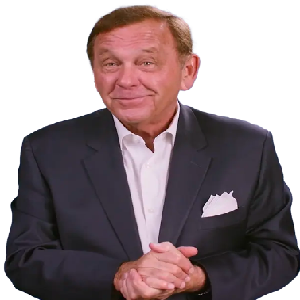
Tony Uttley is the CEO of Enginuity Power Systems, a behind-the-meter cogeneration company delivering combined heat and power solutions to hospitals, schools, farms, and multi-family housing facing the full force of America's coming energy crisis. An engineer by training, Tony spent a decade at NASA's Johnson Space Center, seven years at the Boston Consulting Group, and nearly 15 years at Honeywell, where he ran the residential business and helped found Quantinuum, the quantum computing company now approaching a $10 billion IPO. He brings that same first-principles problem-solving instinct to one of the most consequential infrastructure challenges the country has faced in a generation.








Here’s a glimpse of what you’ll learn:
- Why 20 years of flat electricity demand left the US grid dangerously unprepared for the AI data center era
- How the country would need 80 to 120 new nuclear reactors worth of power in the next 4 years to meet demand, and why that is effectively impossible
- How a New York hospital system was ordered off the grid 5 times in one summer and what that meant for every patient scheduled for surgery those days
- Why Enginuity's combined heat and power systems can deliver payback windows as short as 11 months in some markets
- How a Northern Indiana dairy farm is turning cow waste into renewable natural gas to power its own operations and eliminate 15 micro blackouts a week
- Why Tony selects for humility above all else when building teams to go after problems that may actually be impossible
- Why AI is a national security issue and slowing it down is not an option regardless of the energy cost
In this episode…
Tony opens by tracing the energy crisis back to a decision that made complete sense for two decades and now looks like the setup to a very expensive problem. When electricity demand in the United States grew at an average compound rate of 0.17% for 20 years, nobody invested in new capacity. A $1,000 investment in grid infrastructure in 2005 would have returned $1,037 by 2025. No rational investor made that bet. Infrastructure aged, transmission lines went unbuilt, and electricity prices were kept artificially low by charging consumers only for the cost of producing power rather than the cost of replacing the assets generating it. That worked until it did not. Along came AI, and AI means data centers, and data centers mean 24/7 firm fixed capacity power demand at a scale the existing grid was never built to absorb. Tony is precise about the gap: the country needs somewhere between 80 and 120 gigawatts of power it does not currently produce in the next four years. One full-size nuclear reactor equals one gigawatt. The math is not encouraging, and he says so directly.
The examples Tony uses to make the crisis concrete are the ones that stay with you. A hospital system in New York with 15 facilities across Manhattan and Long Island was told by its utility to go on emergency power five times in a single summer. Each time that happened, every scheduled surgical procedure for the day was cancelled, because starting a new surgery requires two independent power sources, and when the grid goes down, emergency power alone does not qualify. Five times. Real patients sent home. That is what grid instability looks like when it hits a healthcare system already operating on tight margins. Separately, a developer with all permits in place for a new multi-family housing project was told by their utility it would be four to five years before power could be provided. These are not hypotheticals. They are the backdrop against which Tony is selling, and they explain why he says customer resistance has effectively disappeared. The numbers work now in a way they simply did not three or four years ago. In parts of the country where electricity costs $0.35 or more per kilowatt-hour, Enginuity's systems, which deliver all-in at $0.15 per kilowatt-hour including maintenance, produce payback windows that compress to 11 months in some markets.
The leadership conversation in this episode is as valuable as the energy one. Tony has spent his career going after problems with no playbook, from quantum computing to energy infrastructure, and he has developed a hiring philosophy built around a criterion that took him 20 years to consciously identify: humility. Not talent alone. Not raw intelligence. Humility. The high-ego geniuses who bounce everyone else against the wall as they walk down the hall may command respect, but they do not generate the sheer collective will that gets an organization four weeks from going out of business and back out the other side. Tony's model is to find the geniuses, sit on their shoulders, and build the commercial infrastructure around their capability. The ambition he sets for those teams is not calibrated to what seems achievable. At Quantinuum, project milestones were literally world records and firsts of their kind, with specific dates attached. He told teams to aim at the world record line and jump as hard as they could. Missing by two months while doing something that had never been done was, in his framing, an unqualified success. That philosophy is now being applied to a 20-year infrastructure problem with no single solution and no finish line.
Resources mentioned in this episode
Matthew Connor on LinkedIn
CyberLynx Website
Tony Uttley on LinkedIn
Enginuity Power Systems Website
Sponsor for this episode...
This episode is brought to you by CyberLynx.com
CyberL-Y-N-X.com.
CyberLynx is a complete technology solution provider to ensure your business has the most reliable and professional IT service.
The bottom line is we help protect you from cyber attacks, malware attacks, and the dreaded Dark Web.
Our professional support includes managed IT services, IT help desk services, cybersecurity services, data backup and recovery, and VoIP services. Our reputable and experienced team, quick response time, and hassle-free process ensures that clients are 100% satisfied.
To learn more, visit cyberlynx.com, email us at help@cyberlynx.com, or give us a call at 202-996-6600.
Check out previous episodes:
Why Silence After a Breach Helps the Hackers with Scott Dickinson - Ep 214
Breaking Things on Purpose: An Honest Take on AI Readiness and Leadership with Shawn Hamm - Ep 213
Why Machine Learning Is the Unsung Hero of the AI Era with Ben Wilcox - Ep 212
Transcript:
Tony Uttley
CEO, Enginuity Power Systems
Cyber Business Podcast
Matthew Connor: Matthew Connor here, host of the Cyber Business Podcast. Today we're joined by Tony Uttley, CEO at Enginuity Power Systems. Tony, welcome to the show.
Tony Uttley: It's great to be here. Thank you.
Matthew Connor: Thanks for joining us. Before we get too far in, a quick word from our sponsors. Hackers are getting smarter — is your security keeping up? Cyberlynx sells industry-leading, AI-powered cybersecurity solutions that detect threats in real time, so you know about an attack before the damage is done, not after. Learn more at cyberlynx.com. And now back to our show.
Tony, for those who aren't familiar, can you tell us about Enginuity Power Systems and your role there as CEO?
Tony Uttley: Happy to. Enginuity Power Systems provides what we call behind-the-meter power. Most people get their electricity from the grid, but in situations like what's happening in this country right now — where the grid may not be as stable as it has been historically, or where you're building a new facility and the utility tells you they can't provide power for three years — we step in with a solution.
What we offer is called cogeneration, or combined heat and power. The core concept is simple: from a single fuel source, you get multiple benefits. In our case, you get electricity and thermal energy — heat — simultaneously. That heat can be used directly for building heat, hot water, sanitation, laundry. And through a technology called an absorption chiller, if you put enough heat into it, you get cooling out of it. So our systems, when paired with absorption chillers, provide electricity, heat, and cooling — all generated right at the site, behind the meter.
I'm about a year into the CEO role here. This is a real problem our country is facing, and I'm excited to be out there sharing the solution with customers.
Matthew Connor: I want to start by acknowledging what's at stake here. We're all increasingly aware that we have an energy crisis looming — AI data centers require enormous amounts of power, and for the US to stay competitive and secure, we need to be investing heavily in both those data centers and the power to run them. The grid simply can't keep up with the demand. You go to build a hospital or a data center and you're told power isn't available for years. Is that where Enginuity fits in?
Tony Uttley: Let me take that in two pieces. First, a little context on why I came to this space. I'm an engineer by background. I spent a decade at NASA's Johnson Space Center, seven years at the Boston Consulting Group as a management strategy consultant focused on engineering and technology companies, and nearly fifteen years at Honeywell in a variety of roles — including running the residential business and helping found Quantinuum, Honeywell's quantum computing company, which is now headed toward a multi-billion dollar IPO.
The jump from quantum computing to energy may seem unexpected, but the reason is the same: there is a massive problem to solve. Here's the scale of it. The average compound growth in US electricity demand for the past twenty years was 0.17%. That means if you had invested $1,000 in 2005, by 2025 you'd have $1,037. Nobody was going to make that investment — and nobody did. So no significant new power infrastructure was built. The push toward renewables was good, but solar and wind are intermittent and we haven't built the storage to back them up. Meanwhile, aging assets were being removed from the grid and utilities were pricing electricity at the cost of production rather than the cost of replacement. Great for consumers in the short term. A disaster in the making for the long term.
Then AI arrived. AI means data centers. Data centers mean 24/7 firm fixed capacity power demand at a massive scale. That single shift changed the trajectory of electricity demand in this country in a way that will reverberate for decades.
Best estimates right now are that the US will need somewhere between 80 and 120 gigawatts of new power capacity in the next four years. A full-size nuclear reactor produces one gigawatt. So we would theoretically need to build 80 to 120 new nuclear reactors — with all the transmission infrastructure — in four years. That's impossible. We're already seeing it: utility bills doubling, hospitals running on emergency power multiple times per summer, developers being told they can't get power to a new multifamily building for four to five years. That's the crisis. That's what brought me here — because we have a solution that can go right to the customer, right now.
Matthew Connor: I want to highlight your background for a moment, because I think you're underselling it. Quantinuum is now heading toward a $10 billion-plus IPO and is arguably the leader in quantum computing today. You helped found that. And your NASA work before that. You've tackled some of the hardest problems humanity has faced, not as the technical expert in the room, but as the person who finds the geniuses and builds the organization around them. I want to dig into that, because I think there's a real lesson for people in how you approach these impossibly hard problems.
Tony Uttley: I appreciate that. I've learned some things about myself over the course of my career. I genuinely love technology — specifically technology that you have to create to solve hard problems. The more ambiguity there is around how to get something done, the more I thrive. Some people shy away from "that sounds really hard." That's the only thing I want to do.
And I'll be honest about where that comes from: I don't want to follow a script. If there's a playbook, find someone else to run it. If you have no idea how to get something done — that's when I commit. I start from first principles and build up from there.
My real secret, if there is one, is that I surround myself with geniuses. To your point — I'm not a PhD physicist, and that's exactly what you need to build quantum computers. So I found people who were. I think of a quote attributed to Steve Jobs: you don't surround yourself with great people to tell them what to do. You surround yourself with great people so they tell you what to do. I can hear a great idea and figure out how to make it happen. Most technically brilliant people are missing the rest of the picture: how do you commercialize it? How do you get funding? How do you build a company around it? How do you price it and find customers? Those are things where I thrive. I sit on the shoulders of intellectual geniuses and help build something around them.
Matthew Connor: And what do you look for specifically when you're building that dream team? Because cultural fit, teamwork, humility — these all matter alongside raw capability. What's the combination that works?
Tony Uttley: It took me probably twenty years to figure this out consciously, but the single most important selection criterion I've found is humility. Of all things, when you're trying to go find the smartest people in the world to do something that may actually be impossible — humility is what drives success.
The big egos — the ones who clear the hallway when they walk through — nobody wants to be on a team with them for long. People may respect the capability, but if you want people who will give everything, and these moonshot efforts require everything, you need humility. Because at some point in the journey, you will be about four weeks away from going out of business. It's just going to happen. And it's sheer collective will that gets you through it.
I used to tell my team at Quantinuum: I'm not going to have you beat your personal best. I'm going to draw the line at the world record and tell you to jump as hard as you possibly can at it. Will you make it? I don't know. But if you don't even know where it is, you're definitely not going to get there. And if we miss by two months — which did happen — in the scheme of history, the fact that we did it at all was extraordinary. That's the attitude. And my obligation in exchange is: no one goes under the bus. I shoulder that. What I ask in return is that you give it everything.
That philosophy has carried directly into Enginuity. We're building something that didn't exist in this form. It's hard. You have to believe you can do it and push relentlessly. The four-minute mile is a perfect analogy — until someone does it, the mind treats it as impossible. Once it's done, the belief space opens up and others follow. You have to create that shift in belief for your team.
Matthew Connor: And the tools available today — whether AI, advanced materials, connected systems — make that belief space larger than it's ever been. The ancient Egyptians built the pyramids with the tools they had. Imagine what becomes possible with the tools we have now. Let's go back to the energy problem. Walk us through where Enginuity specifically fits.
Tony Uttley: The scale of the problem first. We need 80 to 120 gigawatts in four years that we cannot get from the grid. Electricity bills are doubling in parts of the country. We're working with hospitals right now that have $10 million annual energy bills — and those bills are doubling. A hospital system in New York with fifteen hospitals across Manhattan and Long Island was told to go on emergency power five times last summer. When a hospital runs on emergency power, it can no longer start new surgical procedures because regulations require two independent power sources, and they're down to one. Patients showing up for knee surgery got sent home five times. That was last year. It's getting worse.
What we do is go to hospitals, schools, farms, and multifamily housing and say: we can provide primary power right at your site. Our systems are engines — they run 24/7 — and as they run, they generate electricity and thermal energy simultaneously. If the application is one where you're already consuming thermal energy — and most hospitals, hotels, and large facilities are — then you essentially get your electricity for free. That's the fundamental economic value proposition.
Our systems deliver electricity and heat at around $0.15 per kilowatt-hour, all-in, including maintenance. There are parts of this country where the average cost of electricity is $0.35 a kWh. There are places where it's $0.55. In those markets, the payback on our systems can be as short as eleven months. Even at more moderate electricity prices, you're looking at three to five year paybacks. And that's before you factor in the resiliency value.
A dairy farm in Northern Indiana is a great example of how this can work. They have cows, the cows produce waste, they've installed a digester to convert that waste into renewable natural gas. We can use that renewable natural gas to power our systems, which in turn provide all the electricity, heat, and cooling for everything on the farm — including the digester itself. Meanwhile, this farm is experiencing fifteen micro-blackouts per week. Each one is brief — sometimes less than a second — but when you have pumps, motors, and mechanical systems throughout a facility, every outage requires a manual reset sequence to avoid equipment damage. Fifteen times a week. Our system eliminates that entirely.
Matthew Connor: That's a fantastic use case. Can these systems scale up to data center needs?
Tony Uttley: Not today's hyperscale data centers. Our current systems are 100 kilowatt and 200 kilowatt — a 200 kilowatt unit could power something like an 80-unit apartment building. But we're developing a 500 kilowatt system targeted for next year, which opens the door to smaller and edge data centers. The really interesting thing about data centers as an application is that they're all heat — constant, 24/7 thermal load. Every time someone queries a server, it generates electricity demand and heat. Our systems are actually ideal for that use case because they produce both power and cooling through absorption chillers, and the load is constant rather than variable. We'll get there. Right now, though, we're focused on the immediate crisis — the hospitals, schools, farms, and multifamily housing that are getting squeezed hardest today.
On the economics, I want to address one more barrier. The capital expense is real. Even with a fast payback, you have to put money in first. That's been solved by a new category of energy-as-a-service companies that will provide the capital in exchange for a ten-year power purchase agreement. The customer pays nothing upfront and their energy bill goes down. Energy infrastructure investment is one of the best-performing asset classes right now — there's plenty of capital available from people who understand a clear return profile. That removes the last major obstacle for most customers.
Matthew Connor: And the natural gas question — that comes up, I imagine.
Tony Uttley: It's the first thing that comes up, usually from regulators rather than from customers who actually have a power crisis. And our response is: we're three times more energy efficient than large central power plants, and we produce at least 50% — sometimes up to 70% — fewer greenhouse gases than they do. We can also run on renewable natural gas, which is a genuinely sustainable fuel source. We're working on hydrogen blending as that infrastructure develops. So no, we're not anti-sustainability. We're pro-solving-the-immediate-crisis with the tools available today while building toward a cleaner future.
Matthew Connor: What does the long-term picture look like?
Tony Uttley: Honestly, this is not a two or three-year problem. This is a twenty-year problem. We underinvested for two decades and the bill is coming due. Every available source of power needs to be deployed — large nuclear, small modular reactors, hydroelectric, solar, wind, and behind-the-meter solutions like ours. Everything. AI is not just an economic issue; it is a national security issue. We're not going to lose the AI race to our adversaries. Which means we're going to throw everything we have at the energy problem.
Our job right now is triage. Stop the bleeding. For the hospitals, schools, farms, and light industrial facilities that are facing cost crises and reliability crises today — we can help them now. That's what we're focused on. And as we scale up to the 500 kilowatt system and eventually larger, we'll be able to take on more of the load. But first things first: we have a crisis, we have solutions that work today, and we need to go deploy them.
Matthew Connor: Tony, I can't thank you enough for coming on today. This was fascinating and I think genuinely important for people to hear. Before we go, can you tell everyone where they can find out more about you and Enginuity Power Systems?
Tony Uttley: Please visit us at www.enginuity-power-systems.com, and you can find me on LinkedIn as well. If there is a hard problem — something with real ambiguity, something that really matters to solve — that's where I thrive. I'm excited to take Enginuity to the next level, and I'm sure when this particular challenge starts to get solved, there will be another large humanity-facing problem waiting. Appreciate the time, Matt.
Matthew Connor: Of course. Thanks again, Tony. Until next time.
Tony Uttley: Thank you.